If you run a small business, you’ve probably searched for SEO help and hit the same wall everyone does: one agency quotes you $299 a month, another quotes $3,000, and both of them promise “page one rankings.”
Neither proposal tells you what you’re actually paying for.
Its because there are so many companies offering the same thing, and prices are so different but nobody explains to you what is what.
This guide fixes that. We build and rank websites for small businesses every day at SiteMile, and we’ll show you exactly what an affordable SEO package should include at each price level, what the deliverables are worth, which offers will actively damage your website, and how to compare providers before you buy SEO services online.
By the end, you’ll be able to read any SEO proposal and know within two minutes whether it’s a real plan or an invoice for nothing.
For example we at Sitemile offer no contract seo type of services, where you dont need to be tied up to a 6-12-24 month contract.
Quick answer: a legitimate affordable SEO package for a small business typically costs $400–$2,500 per month and should include, at minimum: a technical audit with fixes, keyword research mapped to your pages, on-page optimization, local SEO (Google Business Profile + citations) if you serve a local area, and a monthly report that lists the actual work performed.
Plus the backlink building services of course.
Below $400/month, almost nothing meaningful gets done — and what does get done is often harmful.
What “Affordable” Actually Means in SEO
Affordable does not mean cheap. It means the package returns more than it costs.
A $250/month package that produces zero new customers is the most expensive thing you can buy — you lose the money and six months of momentum.
A $900/month package that brings in three new clients a month is a bargain. So the right question isn’t “what’s the lowest price?” It’s “what deliverables am I getting per dollar, and can this realistically move my revenue?”
There’s a simple sanity check you can run on any quote: divide the monthly price by a realistic hourly rate. Competent SEO work in Western markets runs $50–$150/hour. A $300/month package therefore buys 2–5 hours of expert time — enough to update a few title tags, not enough to run a campaign. When an agency promises audits, content, link building, and reporting for $300, the math only works with automation, templates, or outsourced spam. The math is the red flag.
What’s Included in a Small Business SEO Package
Regardless of price tier, every legitimate package is built from the same core components. When you compare proposals, check each one against this list — and be suspicious of any proposal that stays vague about which of these it covers.
1. Technical SEO Audit and Fixes
Before anything else, someone needs to confirm Google can actually crawl, index, and render your site properly. On a WordPress site — which is what most small businesses run — this means checking indexation, site speed and Core Web Vitals, mobile usability, duplicate content from archives and tag pages, broken links, redirect chains, and plugin bloat.
There are agencies that do specialised seo for WordPress websites, you can read more on affordable wordpress seo agencies here.
The audit itself is worthless without implementation, so make sure the package includes fixing the critical issues, not just a PDF listing them.
2. Keyword Research and Keyword Mapping
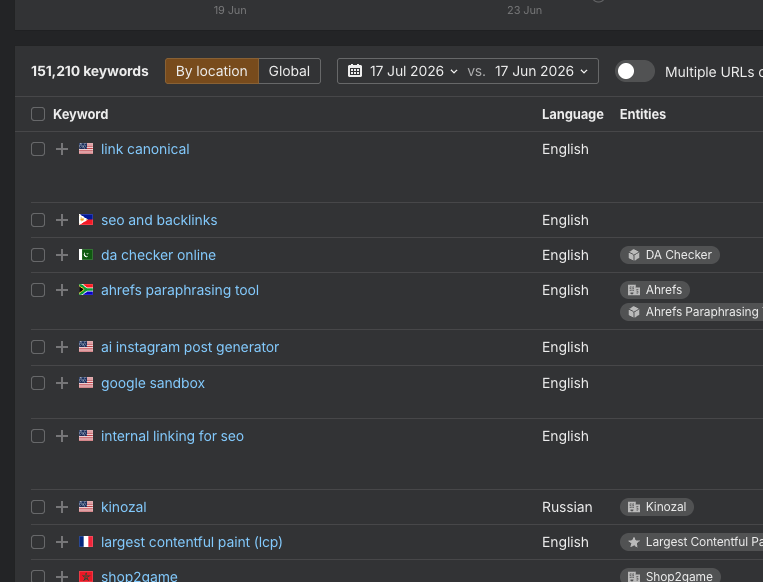
Real keyword research produces a document that maps specific keywords to specific pages on your site: your homepage targets X, each service page targets Y and Z, and content targets the questions your customers ask. A small business shouldn’t chase “plumber” — it should own “emergency plumber [your city]” and “how much does a boiler replacement cost.”
If a provider can’t show you the keyword map they’d work from, they don’t have a strategy; they have a checklist.
3. On-Page Optimization
This is the hands-on work of aligning your pages with the keyword map: title tags, meta descriptions, heading structure, content improvements, image optimization, schema markup, and internal linking between your pages. Packages typically cover a set number of pages per month (5–10 is common at entry level), which is fine — key pages first, then expanding outward.
4. Local SEO (If You Serve a Local Area)
For any business with a physical location or a service area, local SEO is usually the fastest path to actual phone calls. It covers Google Business Profile optimization, consistent name/address/phone citations across directories, review generation strategy, and location-targeted landing pages. If you’re a local business and a proposal barely mentions your Google Business Profile, the provider doesn’t understand small business SEO.
5. Content Creation
At mid-tier budgets and above, expect one to four genuinely researched articles or landing pages per month, written to target keywords from your map. One useful, well-structured article beats ten thin AI-spun posts — both for rankings and for what it says about your business to the humans who land on it.
6. Link Building
Links remain a major ranking factor, but this is also where cheap packages do the most damage (more on that below). At affordable price points, expect modest but real link work: a few quality links per month from relevant sites, local publications, or industry directories — earned through outreach, not blasted through software.
7. Monthly Reporting
Every package must include a monthly report showing: organic traffic, keyword ranking movement, conversions (calls, form fills, sales), and — critically — an itemized list of the work performed that month. The work log is what separates real retainers from “we’ll invoice you and hope you don’t ask.” We’ve written before about why ongoing SEO and website maintenance go hand in hand: SEO is compounding monthly work, not a one-time setup, and the report is how you verify the compounding is happening.
Affordable SEO Package Pricing: What You Get at Each Tier
Here’s the honest breakdown of what your money buys at each level. These ranges reflect what we see across the industry and what we build into our own SEO packages.
| Monthly price | Who it’s for | What’s realistically included | What to expect |
|---|---|---|---|
| Under $300 | Nobody, honestly | Automated reports, directory blasts, maybe one-time homepage tweaks | Minimal results at best; real risk of spam links and penalties |
| $400–$800 | Local businesses in low-competition niches | Audit + fixes, keyword map, on-page for 5–10 key pages, Google Business Profile + citations, monthly report | Local visibility gains in 3–6 months; no content or link building yet |
| $800–$1,500 | Small businesses serious about organic growth | Everything above, plus 1–2 quality articles/month, modest manual link building, ongoing technical monitoring, strategy calls | Steady traffic and lead growth from month 4–6 onward; this is the sweet spot for most small businesses |
| $1,500–$3,000 | Competitive niches, e-commerce, multi-location | More content, proactive digital PR/link campaigns, conversion optimization, deeper reporting | Ability to compete for harder commercial keywords |
Two notes on this table. First, prices scale with competition, not with your ambition — a bakery in a small town needs less firepower than a personal injury firm in a big city. Second, the tiers stack: a provider charging tier-3 prices while delivering tier-1 work is the most common way small businesses get overcharged, and the itemized work log in your monthly report is how you catch it.
What About One-Time or “Full SEO Package” Deals?
You’ll see one-time packages — a full audit plus implementation for a fixed $500–$2,000 fee. These are legitimate and useful as a starting point, especially to fix technical debt on an older WordPress site. Just understand what they are: a foundation, not a campaign. Rankings are competitive and your competitors keep publishing, so a one-time fix without a monthly plan behind it decays.
The common pattern that works: one-time cleanup, then a modest monthly retainer.
Why WordPress Small Businesses Have an Affordability Advantage
Here’s something the generic guides won’t tell you: what platform your site runs on changes what “affordable” can buy.
WordPress powers the majority of small business websites, and it’s the platform where SEO work is cheapest to execute well. Title tags, schema, redirects, content structure, page speed work — on WordPress these are hours of work, not development sprints.
On a locked-down site builder or a custom legacy platform, the same changes can cost multiples more, which quietly destroys the value of any package.
This is also why it pays to hire a provider that actually knows WordPress rather than a generalist reseller. An affordable WordPress SEO agency can diagnose plugin conflicts killing your speed scores, knows which SEO plugins to configure and which to remove, and can implement fixes directly instead of sending you a list of recommendations for “your developer” to handle.
At SiteMile we’re WordPress developers first — we’ve been building WordPress sites and themes for over a decade — so SEO implementation and website design packages come from the same team, and nothing gets lost between “the SEO people” and “the web people.”
Red Flags: How Cheap SEO Packages Damage Small Businesses
The $99–$299 corner of the market isn’t just ineffective — it’s frequently destructive. Recovering from a Google penalty or a toxic link profile can take a year or more, which makes a bad cheap package far more expensive than a good affordable one. Walk away when you see:
Guaranteed rankings. Nobody controls Google’s algorithm. Rankings depend on hundreds of factors including what your competitors do. A guarantee is either meaningless (they’ll rank you for a keyword nobody searches) or a lie.
Bulk backlink promises. “50 backlinks per month” at a low price means automated links from link farms, spam directories, and comment sections.
These are precisely the links Google’s spam systems are built to detect. One relevant link from a real site outweighs a thousand of these — and the thousand can get you penalized.
Secret methods. “Proprietary techniques” that can’t be explained are black-hat techniques. A legitimate provider will happily walk you through exactly what they do, because none of it is secret — it’s just work.
No work log. If monthly reports show graphs but never an itemized list of tasks completed, you cannot verify anything happened. Vanity-metric reports (impressions up! rankings for obscure keywords up!) with no traffic or lead movement are the standard camouflage of providers doing nothing.
Instant results promises. Legitimate SEO shows meaningful movement in roughly 3–6 months, with compounding gains after that. Anyone promising page one in two weeks is either lying or doing something that will hurt you.
How to Choose Before You Buy SEO Services Online
Buying SEO services online is normal now — most providers, including us, sell defined packages with published pricing. That transparency is good for you, but you should still vet before you commit. Five questions that expose everything:
- “What exactly will you do in the first 90 days?” You want a concrete sequence: audit, fixes, keyword mapping, on-page work. Vague answers mean templated delivery.
- “Can I see a sample monthly report?” The single fastest quality test. Look for the itemized work log.
- “How do you build links?” Listen for manual outreach and content; run from volume promises.
- “What results have you gotten for businesses like mine?” Case studies or references, ideally in a similar niche or competition level.
- “What are the contract terms?” Month-to-month or short initial terms are a confidence signal. Twelve-month lock-ins protect the agency, not you.
Also do one thing agencies can’t fake: check how they show up in search. It’s worth reading how real business owners talk about choosing providers — we broke down what small business owners actually recommend in our post on the best SEO companies for small businesses according to Reddit, and the pattern is consistent: transparency and work logs beat big promises every time.
Making the Budget Work: SEO Alongside Your Other Website Costs
SEO doesn’t exist in a vacuum — it’s one line in your total website budget alongside hosting, maintenance, and occasional design work. Two practical tips for fitting it in:
Bundle where it makes sense. Website-plus-SEO packages from a single provider are usually cheaper than hiring separately, and they eliminate the classic failure mode where the SEO’s recommendations sit unimplemented because the developer is a different vendor.
(This is most of why our clients combine our SEO and development work.) If you’re budgeting holistically, our guide to how much it costs to maintain a website covers the full picture.
Start at the tier your competition requires, not the tier your budget prefers. Underfunding SEO in a competitive niche doesn’t get you slower results — it gets you no results, because you never clear the threshold your competitors have set.
If the honest answer is “your niche needs $1,200/month and you have $500,” a good agency will tell you to fix your technical foundation now and wait on the campaign, rather than take your $500 and burn it.
When to Scale Up
An affordable package isn’t forever — it’s a starting point.
Upgrade when: you’ve hit your initial goals (e.g., top-3 local rankings) and want to expand to new areas or keywords; growth has plateaued because you’ve maxed out what on-page work alone can do; competitors have visibly increased their content and link velocity; or your ROI is clearly positive and reinvesting is the obvious move.
The right time to scale is when the data says the current tier is working — never as a leap of faith.
Frequently Asked Questions
How much should a small business spend on SEO per month? Most small businesses get real results in the $400–$1,500/month range, with $800–$1,500 as the sweet spot for competitive-but-winnable niches. Below roughly $300–$400/month, there aren’t enough expert hours in the budget to do meaningful work.
What should a monthly SEO retainer include? Ongoing on-page optimization, technical monitoring, content creation appropriate to your tier, link building, and a monthly report with traffic, rankings, conversions, and an itemized work log. The work log is non-negotiable.
How long until an affordable SEO package shows results? Expect early movement (local rankings, long-tail keywords) around months 2–3 and meaningful traffic and lead growth around months 4–6, compounding afterward. SEO is a compounding investment: unlike ads, the gains persist after the spend.
Is cheap SEO better than no SEO? Often no. Sub-$300 packages frequently use automated link building and spam tactics that can trigger Google penalties. Doing nothing keeps your site clean; doing cheap SEO can leave it worse than when you started.
Can I buy SEO services online without a sales call? Yes — productized SEO packages with published pricing and defined deliverables are increasingly standard, and the transparency works in your favor. Just apply the same vetting: defined deliverables, sample report, clear link-building methodology.
Do SEO packages include website changes, or do I need a developer too? It depends on the provider. Pure-SEO agencies often deliver recommendations you must implement separately, which adds hidden cost and delay. Agencies that are also developers (like us) implement directly — on WordPress this is a significant practical and cost advantage.
Ready to See Real Numbers?
We publish exactly what’s in each of our tiers — deliverables, page counts, content volume, and reporting — on our SEO packages page.
No sales call required to see pricing, and because we’re WordPress developers, everything we recommend, we implement.