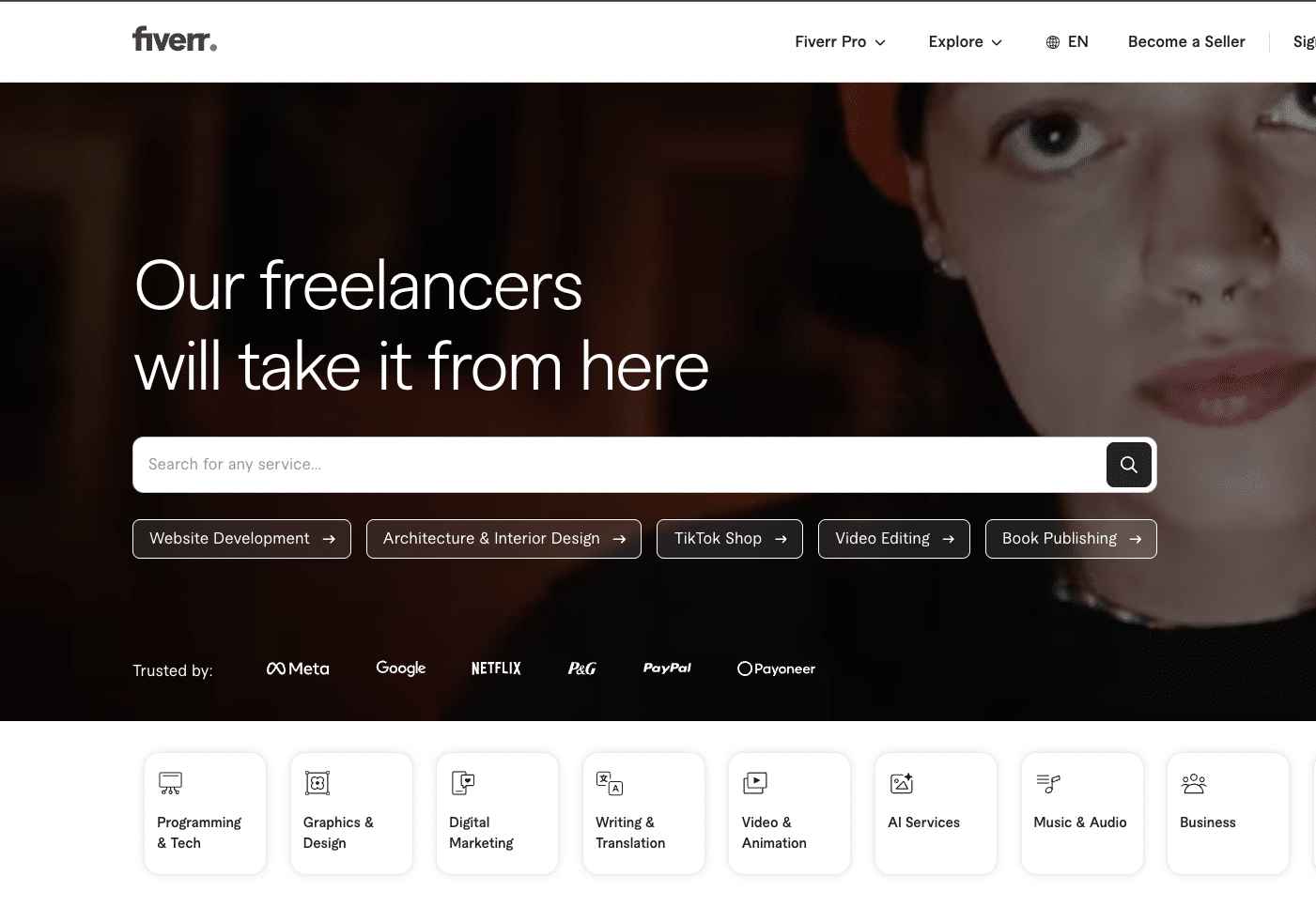
Fiverr turned freelancing into a product you can buy off a shelf — but its 20% seller commission, crowded categories, and race-to-the-bottom pricing push both freelancers and buyers to look elsewhere.
Whether you’re a client who wants better talent, a freelancer who wants to keep more of your earnings, or an entrepreneur eyeing the marketplace model itself, here are the eight best sites like Fiverr in 2026.
1. Upwork — Best Overall Alternative
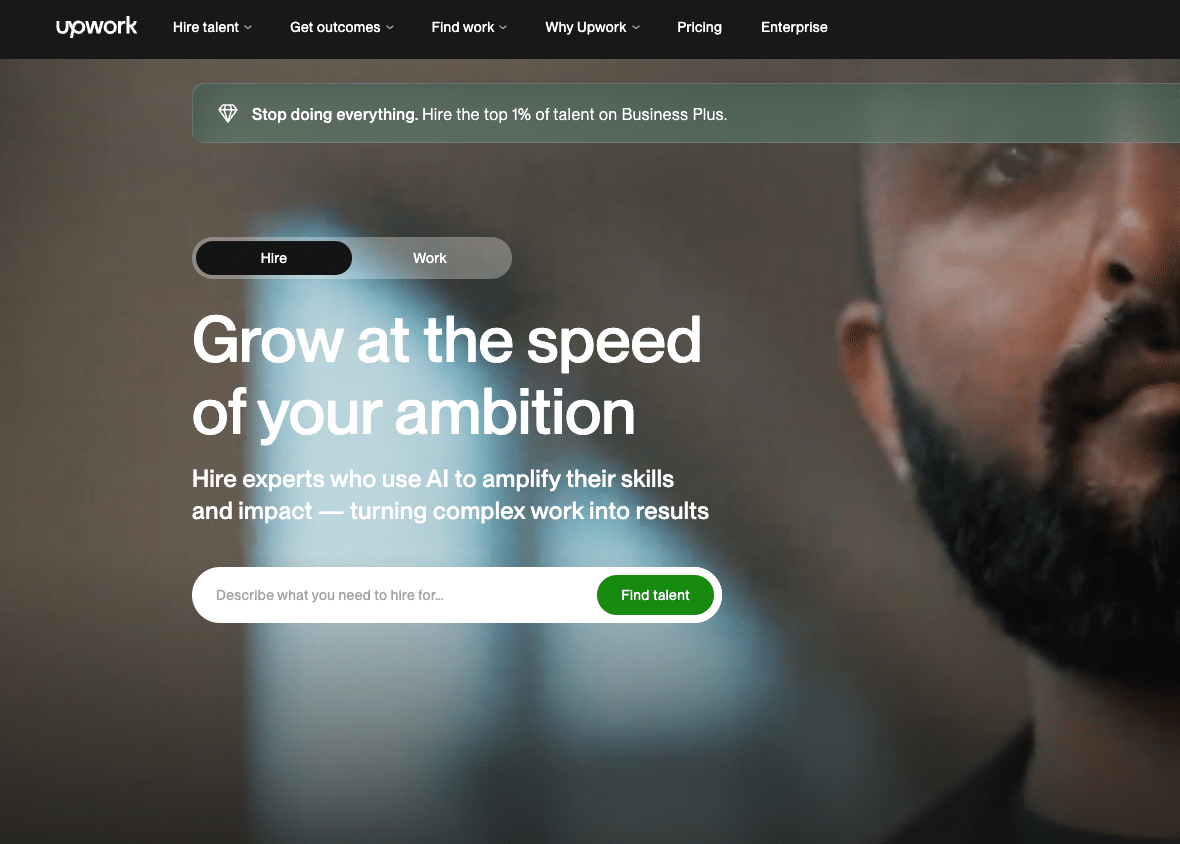
Upwork is the biggest name in freelancing after Fiverr, built on the opposite model: clients post jobs and freelancers submit proposals, rather than buying pre-packaged gigs. That makes it stronger for larger, ongoing, or loosely defined projects — development, marketing retainers, virtual assistance. Freelancers pay a flat 10% fee (half of Fiverr’s cut), and verified work history plus hourly protection make it the safer choice for long engagements on both sides.
Although upwork might be the best overall alternative, there are others which are worth mentioning, and of course there are alternatives to upwork as well, which can be checked out.
2. Freelancer.com — Best for Competitive Bidding
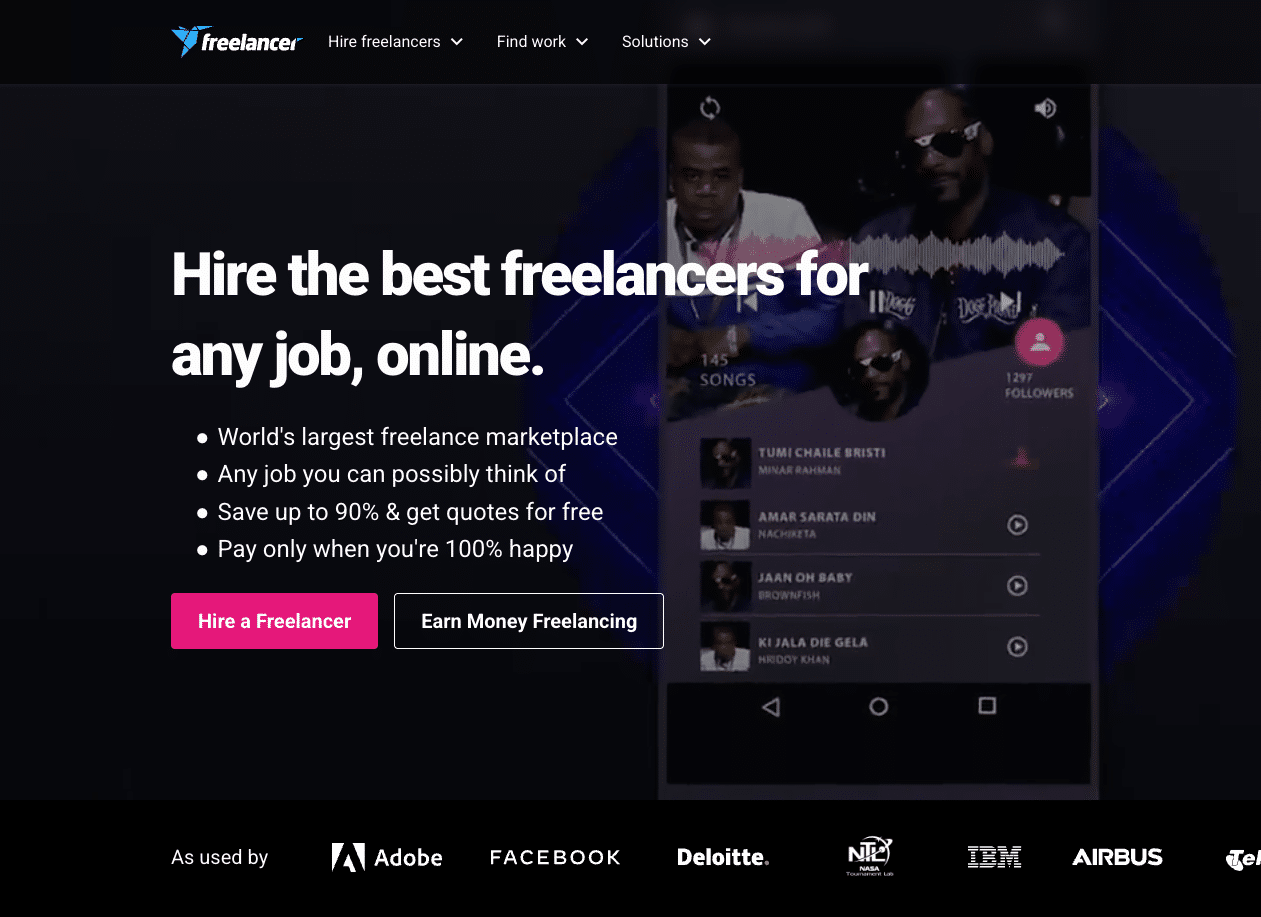
Freelancer.com runs the classic bidding model: post a project, watch offers arrive within minutes, and compare bids, portfolios, and reviews side by side. Its enormous global talent pool makes it one of the cheapest places to get work done, and its contest feature — where multiple freelancers submit finished work and you pay only the winner — is genuinely useful for logos and design. Quality varies widely, so vet reviews carefully.
3. PeoplePerHour — Best in the UK and Europe
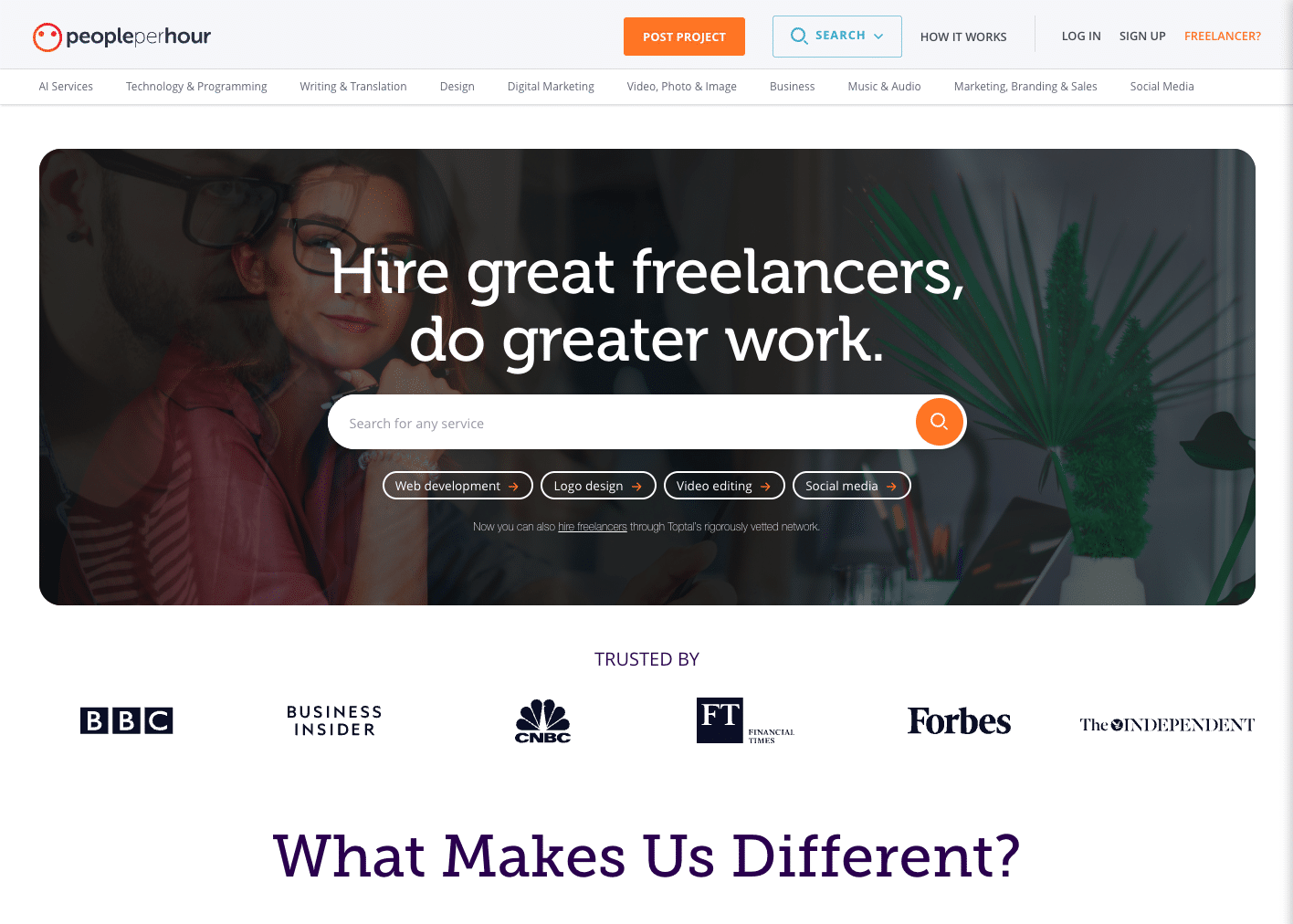
PeoplePerHour blends both models: freelancers sell fixed-price “Offers” (like Fiverr gigs) and also bid on posted projects. It’s strongest in the UK and Europe, which matters if you want freelancers in your timezone or invoices that play nicely with EU VAT. Commission is tiered, dropping as a freelancer earns more with the same client — a structure that rewards long-term relationships instead of taxing them.
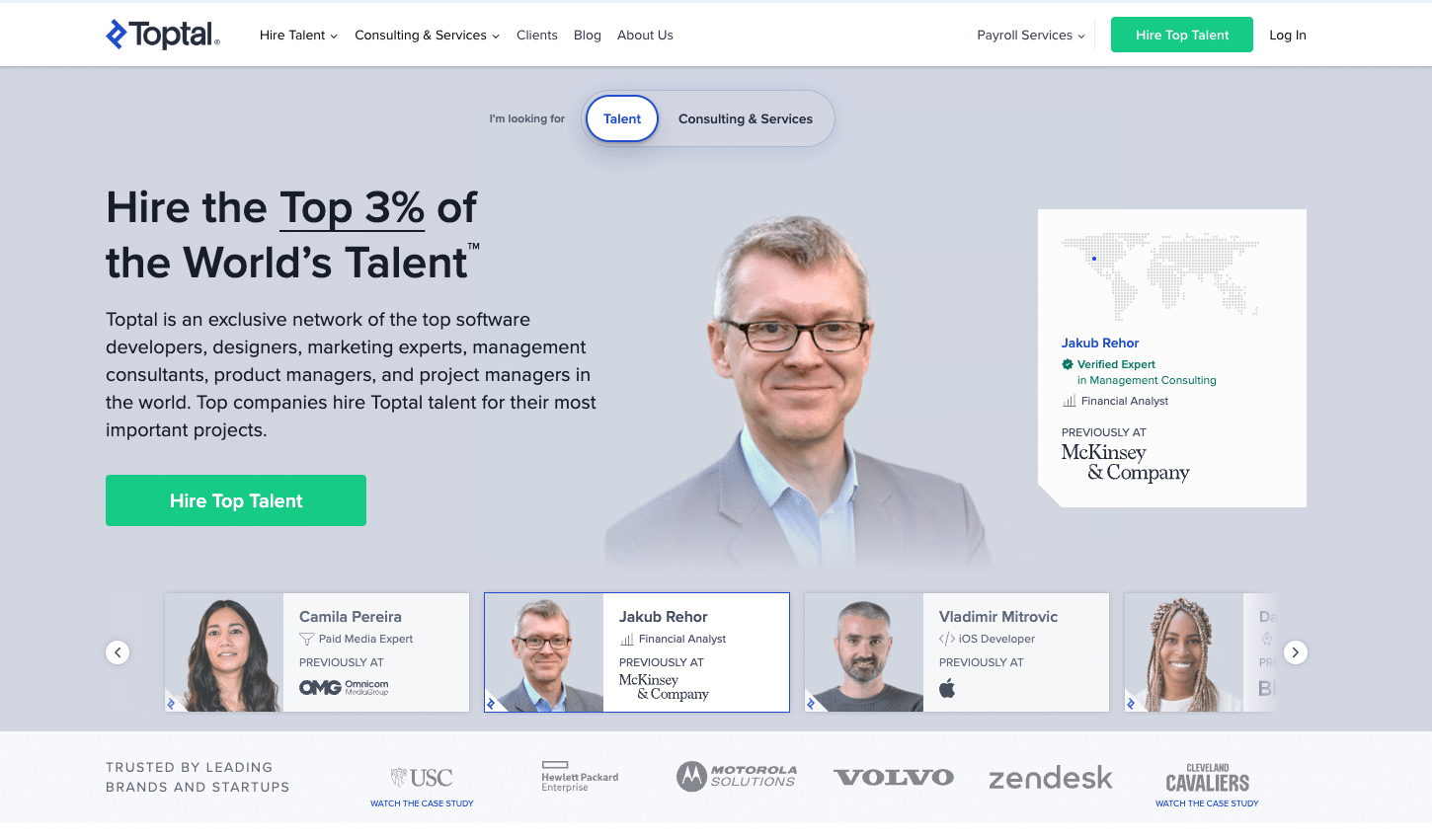
4. Toptal — Best for Premium Talent
Toptal sits at the opposite end of the market from Fiverr’s $5 gigs: it claims to accept only the top 3% of applicants in software development, design, and finance, after multi-stage screening. Rates are consultancy-level, and there’s a deposit to start — but when a project is too important to gamble on an unvetted stranger, Toptal is the “hire once, hire right” option.
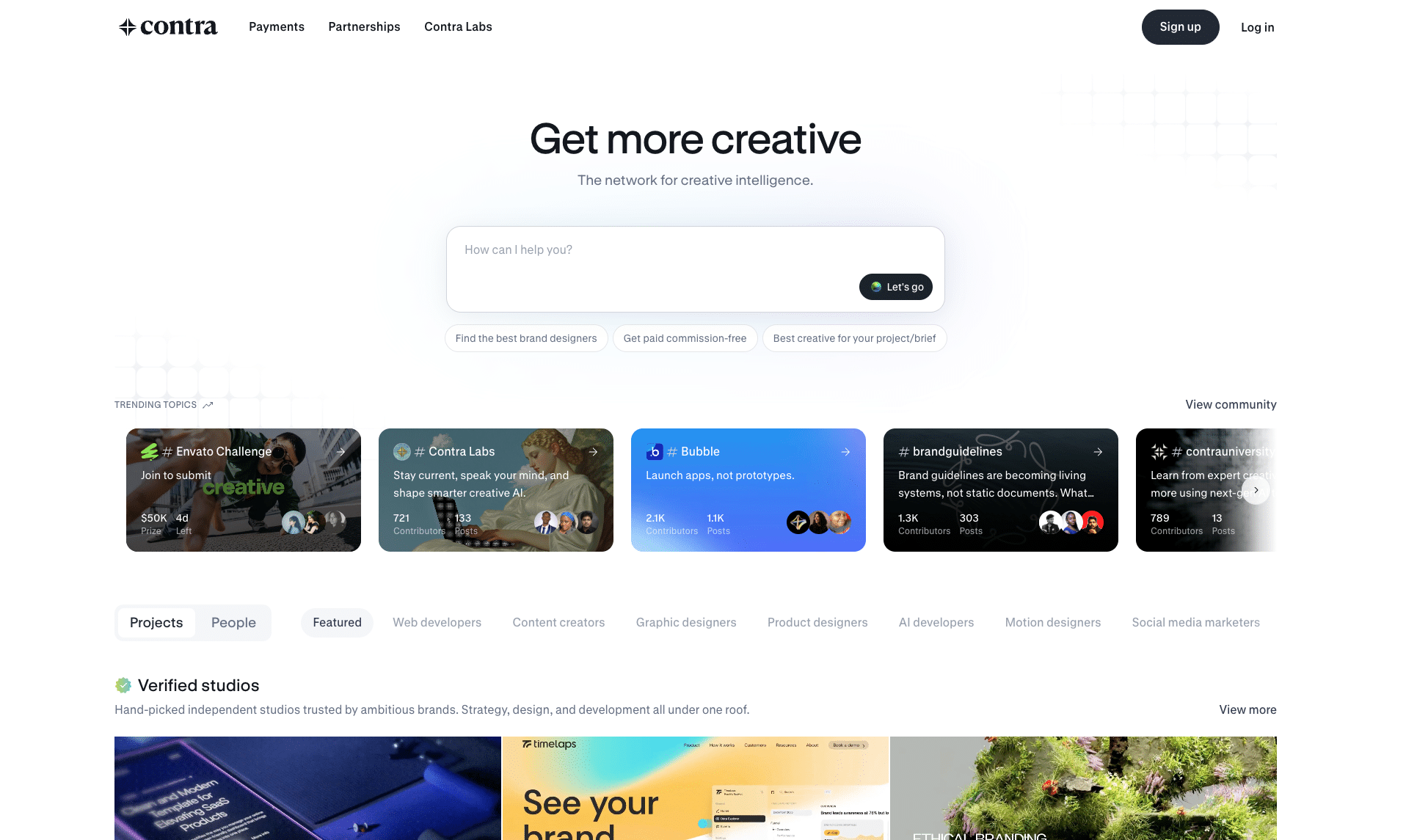
5. Contra — Best Commission-Free Option
Contra’s pitch is exactly what frustrated Fiverr sellers want to hear: 0% commission on earnings. Freelancers keep everything; the platform monetizes through optional subscriptions and client-side tools. It’s grown fast with designers, developers, and marketing freelancers building independent brands. The trade-off is a smaller job feed than the giants — many freelancers use it as their portfolio-plus-payments hub while sourcing clients elsewhere.
6. 99designs — Best for Design Work
For logos, branding, packaging, and web design, 99designs (by Vista) beats browsing hundreds of near-identical Fiverr gigs. Its signature contest model lets you collect dozens of actual design concepts from different designers and pay for the one you love — or you can hire a specific designer directly from their portfolio. Purpose-built briefs, revision workflows, and design-specific categories make the whole process smoother than a generalist platform.
7. Guru — Best for Low Fees on Both Sides
Guru is the quiet veteran of this list, running since 1998. Its commissions are among the lowest of any major platform, and its WorkRooms and flexible payment terms (milestones, hourly, recurring, task-based) suit ongoing professional relationships. The talent pool skews toward development, writing, and administrative work. It has less buyer traffic than Upwork — which, for freelancers, also means less competition per job.
8. Niche Marketplaces — Best for Specialized Work
Fiverr’s biggest weakness is being everything to everyone. Specialized alternatives keep winning categories away from it: SEOClerks and Legiit for SEO services, Voices.com for voice-over, Tilda-adjacent and Codeable for WordPress development specifically, ProBlogger’s job board for writers. If you buy or sell in one vertical, a niche marketplace almost always offers better-matched clients, fairer pricing, and less noise.
Quick Comparison
| Site | Best for | Freelancer fee |
|---|---|---|
| Upwork | Ongoing projects | 10% |
| Freelancer.com | Cheap competitive bids | 10% / project fees |
| PeoplePerHour | UK & Europe | Tiered, decreasing |
| Toptal | Elite vetted talent | Built into rates |
| Contra | Keeping 100% of earnings | 0% |
| 99designs | Design contests | Platform fee per project |
| Guru | Low fees, long-term work | ~5–9% |
| Niche sites | Specialized categories | Varies |
The Opportunity Hiding in This List
Look at entry #8 again: the fastest-growing sites like Fiverr aren’t clones of Fiverr — they’re niche marketplaces serving one category or one region better than a giant ever could. That’s a business model you can own, and it costs far less to launch than most founders assume.
Our WordPress Project Freelancer theme gives you a complete freelance marketplace out of the box — project posting, freelancer bidding, profiles and portfolios, escrow-style payments, reviews, and private messaging — the same core mechanics as Freelancer.com or Upwork, running on your own domain, with you collecting the commissions. It’s one of the marketplace themes we’ve refined over 15 years, and if you need custom features on top, our WordPress development team builds them. Tell us about your marketplace idea — a niche freelance platform can be live in weeks.
The Bottom Line
The best site like Fiverr depends on which of Fiverr’s flaws sent you searching: Upwork for bigger projects, Contra to escape commissions, Toptal for guaranteed quality, 99designs for design, PeoplePerHour in Europe, and niche marketplaces for specialized work. And if your niche still doesn’t have its own marketplace — that’s not a gap in this list. That’s your opening.