Craigslist proved that people will buy and sell almost anything locally. OfferUp proved they’d rather do it from their phone — with photos that look good, sellers they can rate, and chat that doesn’t mean handing out their email to strangers.
That formula turned OfferUp into one of the biggest local marketplaces in the US, big enough to absorb its main rival Letgo in 2020. And here’s the part that matters to you: OfferUp holds no inventory, ships almost nothing itself, and takes money on promoted listings and transaction fees. It’s a classifieds site with a modern trust layer — one of the most clonable models in tech.
We’ve already covered the buyer’s side of this market in our guide to sites like OfferUp. This article is for the other reader: the entrepreneur who looks at that list and thinks, none of these own my city or my niche — I could build this.
How OfferUp actually works (and makes money)
The user flow is deliberately simple — that simplicity is the product:
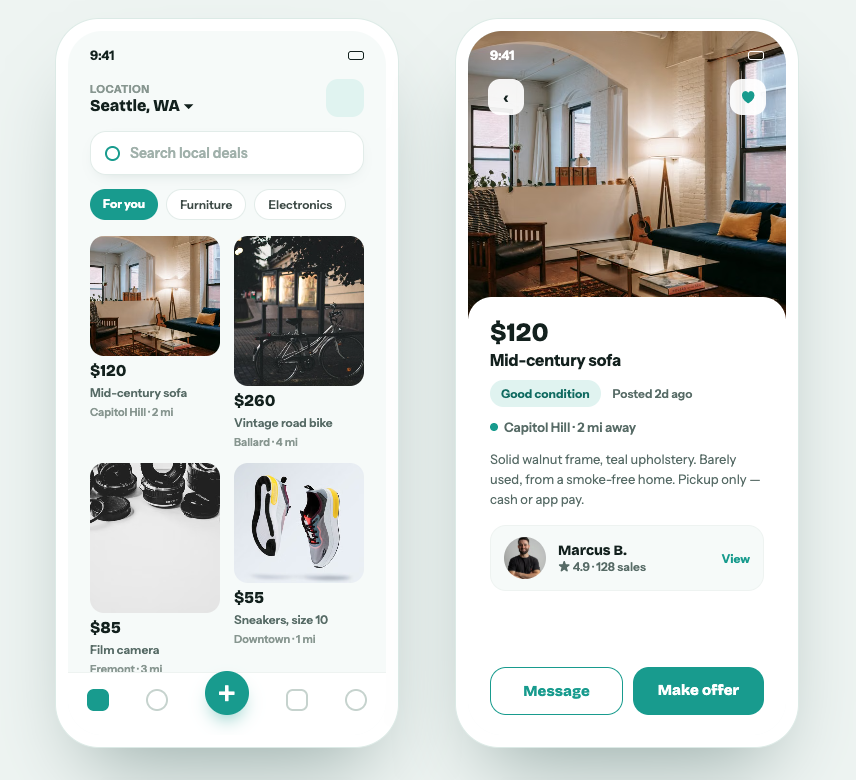
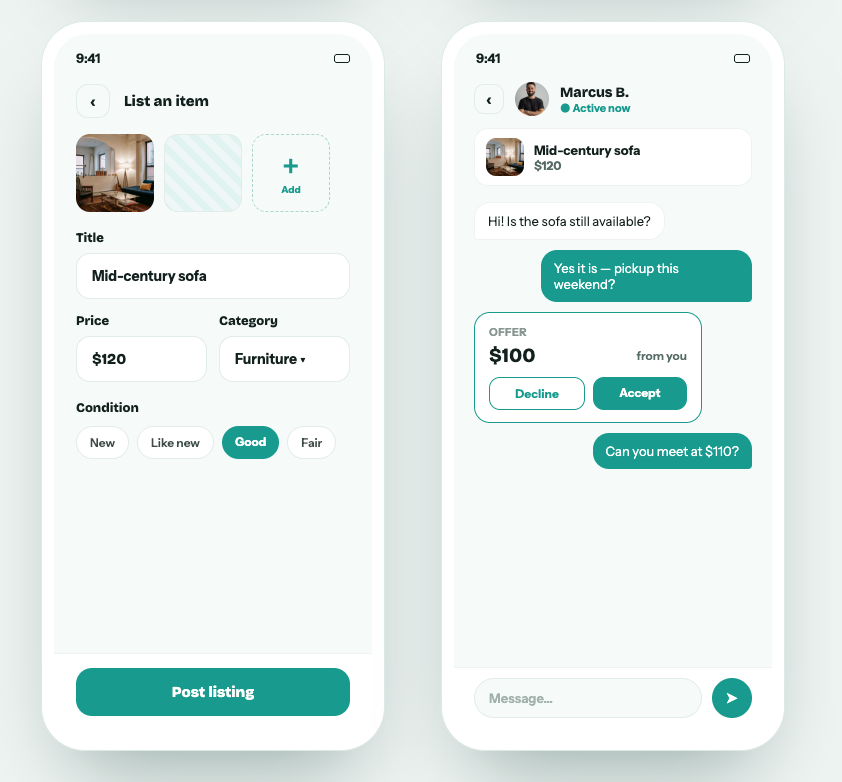
- Snap and list. A seller photographs an item, adds a title, price, and category, and the listing is live in under a minute. Location comes from the phone.
- Browse nearby. Buyers scroll a photo-first feed of items around them, filter by category and distance, and tap to see details.
- Chat in-app. Negotiation happens in built-in messaging — no phone numbers or emails exchanged, which keeps users on the platform and scammers easier to police.
- Meet up or ship. Local deals close in person (community meetup spots became an OfferUp signature); for shipped items, payment runs through the platform.
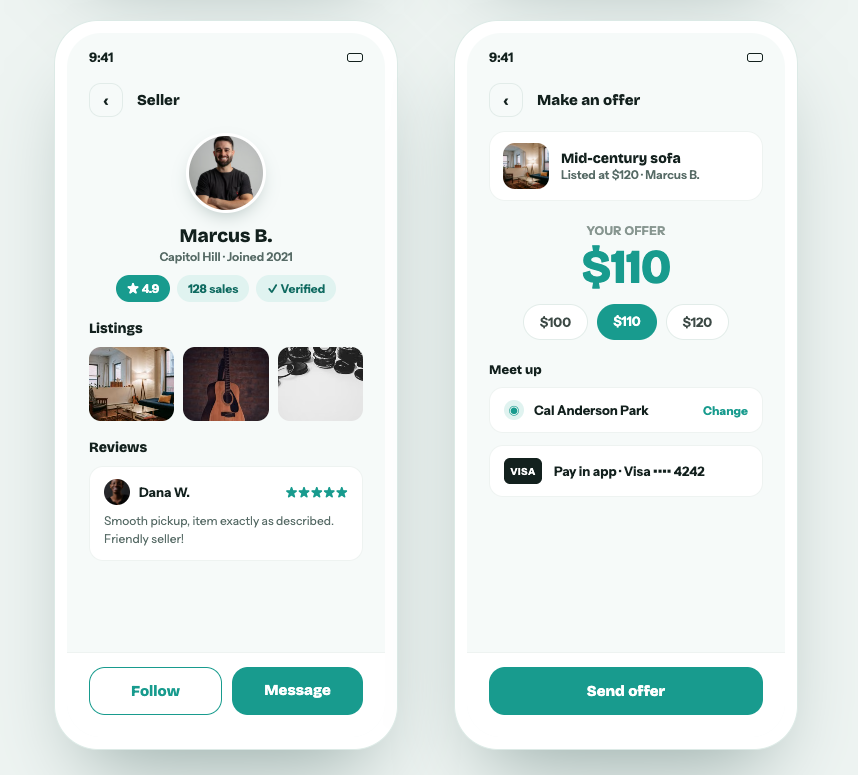
- Rate each other. Profiles carry ratings, verification badges, and response times — the trust features Craigslist never built.
The revenue engine has three parts, and your clone can launch with any one of them:
- Promoted listings. Sellers pay to bump items to the top of the feed — the classifieds cash cow, pure margin.
- Transaction fees on shipped sales. OfferUp takes a percentage when it processes the payment.
- Seller subscriptions. Power sellers and small dealers pay monthly for extra listings and visibility.
The features your OfferUp clone needs
For buyers and sellers (most users are both):
- Photo-first listings with fast, mobile-friendly posting
- Location-based feed with category and distance filters
- In-app messaging with offer/counter-offer flow
- User profiles with ratings, reviews, and verification badges
- Favorites, saved searches, and alerts for new items nearby
Monetization features:
- Paid listing promotions and bumps
- Optional in-platform payments for shipped items, with your fee baked in
- Subscription plans for high-volume sellers
For you (the admin):
- Category, fee, and promotion management
- Listing moderation and prohibited-item filters
- User reporting, bans, and fraud tools
- Analytics: listings, sales, revenue by category and region
That trust-and-safety column deserves emphasis. Craigslist’s weakness — spam, scams, anonymity — is exactly what OfferUp fixed, and it’s what your clone must get right to win users from both.
Building it with WordPress
This is classifieds territory, which happens to be one of the things WordPress does best. We start from our classified ads WordPress theme, which already handles listings, categories, user accounts, payments for featured ads, and messaging — then customize it into the OfferUp flow: photo-first feed, location filtering, offers, ratings, and your monetization mix.
The economics:
- Web platform: $2,500–$10,000 depending on how far you customize
- Web + native iOS and Android apps: around $15,000–$20,000 all-in — and for this model the apps matter more than usual, because OfferUp’s whole edge over Craigslist was being mobile-first. Built with React Native, published to both stores, full source code handed over.
Compare that with the $50,000–$100,000 a conventional agency quotes for the same platform, and the math is simple: launch for a tenth of the cost, spend the difference on getting your first thousand listings.
We don’t copy OfferUp’s design or trademarks — we build your brand on the same proven flow, adapted to your market. If you want to study the ancestor of this model first, we’ve also written about building a Craigslist clone; the OfferUp version is that idea with the trust layer and mobile experience modern users expect.
Have a niche or city in mind? Schedule a discovery call and we’ll scope it with you.
Where an OfferUp clone wins in 2026
OfferUp and Facebook Marketplace dominate general local selling in the US — you don’t beat them head-on. You beat them by being specific:
- One country or region. OfferUp barely exists outside the US. A mobile-first local marketplace for your country, in your language, with local payment methods, is the single most proven play — it’s how Letgo, Wallapop, and dozens of national champions grew.
- One vertical. Furniture, tools, baby gear, auto parts, farm equipment, sneakers — a category-specific marketplace can offer filters, trust features, and a community a general platform never will. (Vinted did exactly this to eBay with secondhand fashion.)
- A trust-first angle. Verified-users-only, women-only, campus-only marketplaces — smaller by design, but with conversion and safety the giants can’t match.
The marketplace playbook is the same in every case: get listings density in one niche or place, and buyers follow.
Frequently asked questions
What’s the difference between an OfferUp clone and a Craigslist clone?
Same core — local classifieds — different generation. A Craigslist clone is listings and replies; an OfferUp clone adds the mobile-first feed, in-app chat and offers, ratings, verification, and optional in-app payments. We build both, and the honest answer is that in 2026 you should build the OfferUp version even if you niche it down.
How much does it cost to build an app like OfferUp?
With SiteMile, from about $2,500 for a customized web platform, and $15,000–$20,000 for the complete package with native iOS and Android apps and source code. Request a quote with your feature list for an exact number.
How does an OfferUp clone make money?
Promoted listings, transaction fees on in-platform payments, and seller subscriptions. Promoted listings are the easiest to launch with — no escrow, no payouts, just sellers paying for visibility.
Do I need mobile apps at launch?
You can validate with a mobile-friendly website, but this model rewards native apps sooner than most — instant photo listing and push notifications for offers are core to why OfferUp beat Craigslist. Our package prices the apps in from the start so you’re not rebuilding later.
Launch your local marketplace
Every year, buyers get more comfortable purchasing secondhand, and every underserved country, city, and category is an opening for a focused OfferUp alternative. We’ll build the platform and the apps and hand you the source code; you pick the niche and own it.
Get in touch with our team today and let’s scope your OfferUp clone.