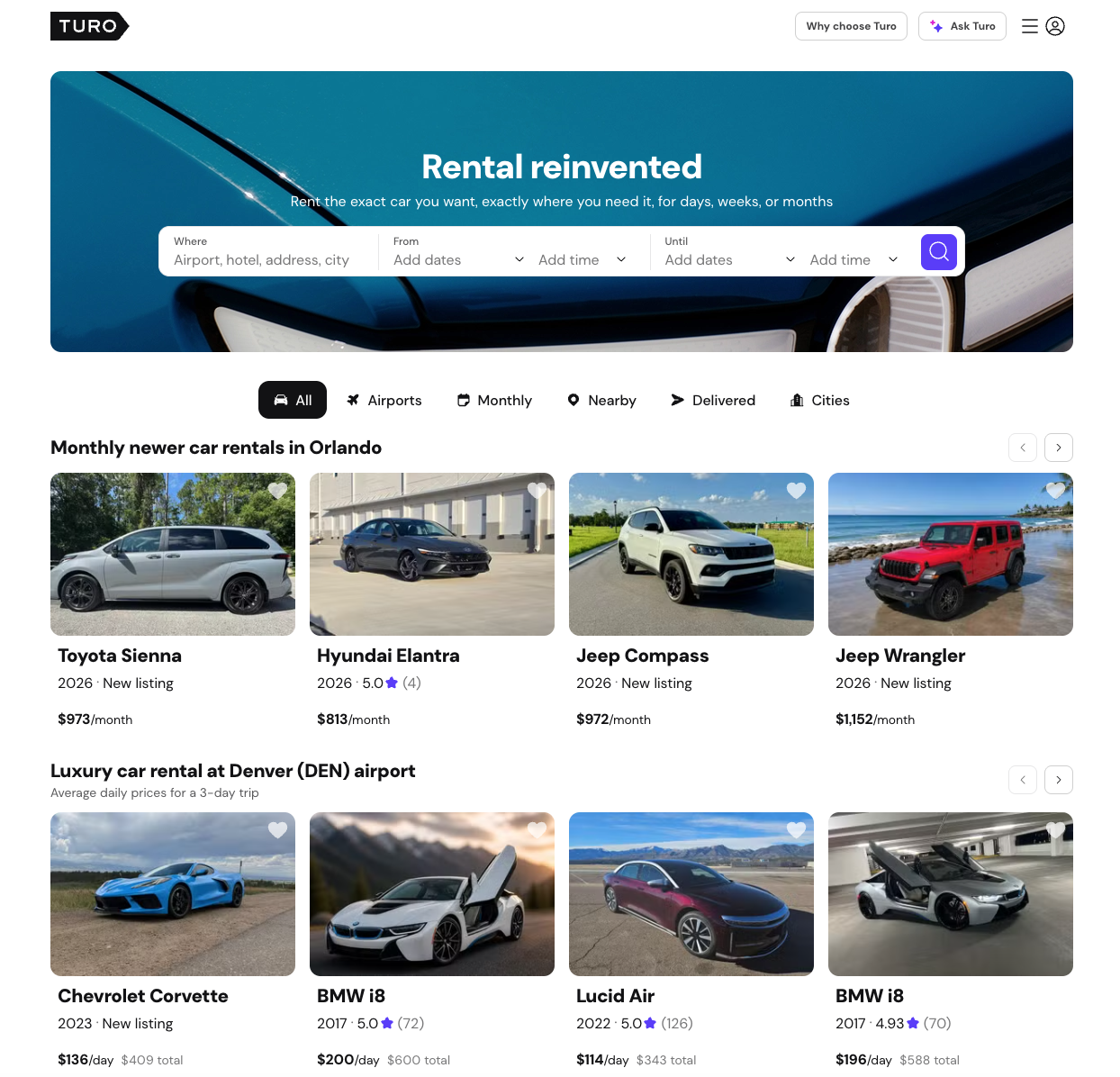
Turo turned private cars into a rentable asset class — the “Airbnb of cars,” where hosts list their vehicles and travelers skip the rental counter entirely.
It’s the biggest peer-to-peer car sharing marketplace in the world, and for millions of trips a year it just works.
But it’s not the only game, and it’s not the best fit for everyone. Renters get stung by young-driver fees and trip fees; hosts watch a meaningful slice of every booking go to the platform; and whole categories of vehicles and whole regions sit outside Turo’s sweet spot.
Whether you’re a renter comparing options, a host diversifying income, or an entrepreneur studying the model (we’ll get to you at the end), here are the five best apps like Turo in 2026.
1. Getaround — closest to Turo, now Europe-focused
Getaround is the most direct Turo rival in mechanics: private owners list cars, renters book by the hour or day, and its “Connect” keyless device lets you unlock the car with your phone — no key handoff, no meeting the owner. That instant, contactless flow is genuinely more convenient than Turo’s typical check-in.
The big caveat: Getaround shut down its US operations in February 2025 and now operates in Europe — France, Germany, Spain, the UK, Norway, the Netherlands, and neighboring markets.
Best for: hourly, city-based rentals in Europe with zero-friction pickup. Watch out for: no US availability anymore — a gap worth remembering when we talk about market openings below.
2. Zipcar — the membership model
Zipcar (owned by Avis Budget Group) predates Turo and works differently: no private owners, just a company-owned fleet parked around cities and campuses in hundreds of locations. Members pay a monthly or annual fee, then book cars by the hour through the app, which also unlocks the vehicle.
Best for: city dwellers who need a car a few hours at a time, predictably, with fuel and insurance bundled in. Watch out for: membership fees make it poor value for occasional use, and selection is commodity fleet cars — no picking a convertible for the weekend.
3. HyreCar — cars for gig drivers
A clever niche twist on the Turo model: HyreCar rents cars specifically to Uber, Lyft, and delivery drivers who don’t own a qualifying vehicle. Owners list cars for weekly rental; gig workers get wheels plus the rideshare-compatible insurance that normal rentals and Turo trips don’t provide.
Best for: gig drivers needing a work car, and owners wanting longer, recurring rentals instead of weekend trips. Watch out for: it’s strictly a work-car marketplace — not for vacations — and per-week costs demand serious driving hours to pencil out.
4. SnappCar — the European peer-to-peer player
SnappCar is Europe’s homegrown Turo: tens of thousands of privately owned cars across the Netherlands and neighboring markets, with keyless access on many vehicles and hourly pricing. For European renters it often beats Turo on local coverage and price.
Best for: peer-to-peer rentals in Northern Europe. Watch out for: limited footprint outside its core markets.
5. Outdoorsy — the same model, different vehicles
Outdoorsy (and its rival RVshare) applies the Turo playbook to RVs and campervans; Riders Share does the same for motorcycles. Same mechanics — private owners, protection plans, reviews, platform fees — pointed at vehicle categories Turo barely touches.
Best for: road-trip vehicles Turo doesn’t specialize in. Watch out for: nothing, really — except to notice the pattern. Every one of these vertical spin-offs became a real business by taking a proven marketplace model into one under-served niche. Hold that thought.
How Turo actually makes money (read this before building)
Turo’s revenue engine is worth studying: hosts choose a protection plan, and the plan determines the commission Turo keeps from each booking — the more risk Turo carries, the bigger its cut, reaching a substantial share of every trip.
Add guest trip fees on top, and the platform earns from both sides of a transaction involving an asset it doesn’t own, insure at a loss, or maintain. Hosts handle the cars; Turo handles matching, payments, and trust — and takes its slice at the point where they meet.
That model — plus the gaps you just read about — is why “app like Turo” is one of the most common requests we get. Getaround left the entire US hourly-rental market open. Most countries have no strong local player. And every vehicle vertical — vans, classic cars, trucks, boats, equipment — is Outdoorsy waiting to happen.
Building your own Turo-style app
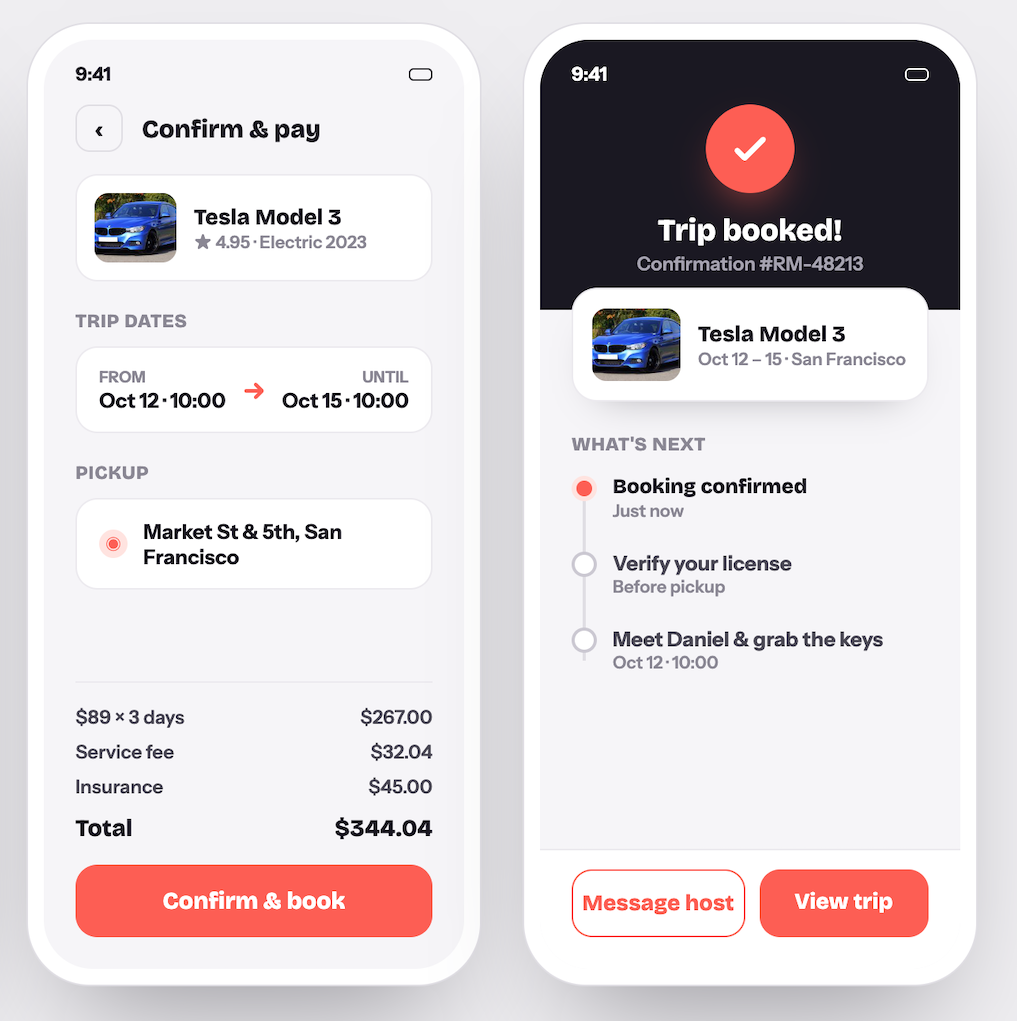
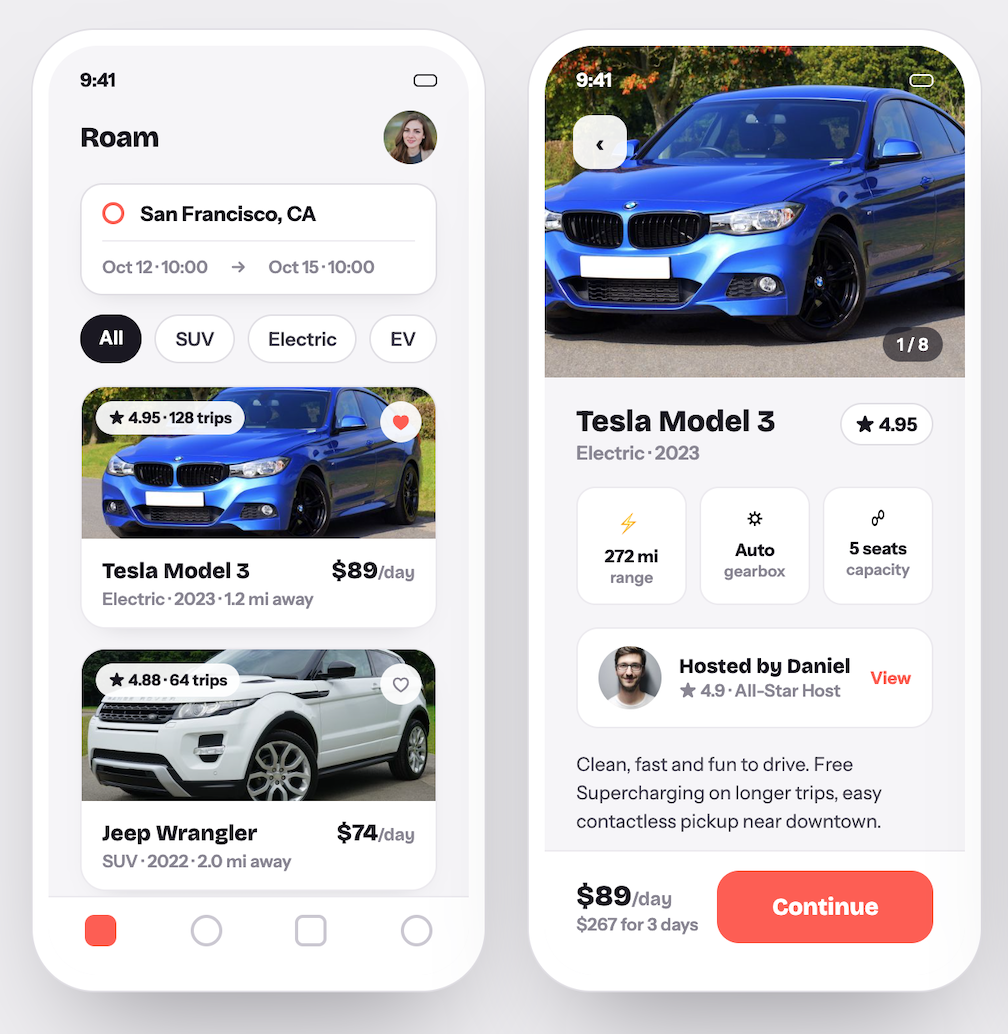
A car sharing platform is a rental marketplace: listings with calendars and pricing, booking and payment flows, owner and renter profiles with verification, reviews, and messaging. It’s an architecture we know well — it’s the same family as the transportation marketplaces we build, and the general marketplace playbook applies directly.
What it costs with SiteMile: from $5,500 for the app and website, up to $50,000 for complex implementations. The entry package gets you a working platform — web plus native iOS and Android apps built with React Native and published to both stores — with listings, availability calendars, bookings, payments, messaging, and reviews.
The upper range covers the heavier lifting: keyless-entry hardware integrations, dynamic pricing, insurance-partner workflows, ID and license verification, fleet-owner dashboards, and multi-region setups. Full source code is handed over at every tier, and a conventional agency would quote $80,000–$150,000+ for the same scope.
Learn more about our turo clone and get in touch so we can design and build it for you
Where new entrants win, based on everything above: a country or city the giants ignore (the Getaround-shaped hole in US hourly rentals being exhibit A), a vehicle vertical (the Outdoorsy play), or a host-friendlier fee structure than the incumbents’ take rates.
Have a car sharing or rental marketplace idea? Schedule a discovery call and we’ll map your feature list to a fixed quote.
Frequently asked questions
What app is most similar to Turo?
Getaround, in mechanics — peer-to-peer listings with hourly booking and keyless access — though since its 2025 US shutdown it’s a Europe-only answer. In the US, the closest experiences are Zipcar for hourly access and HyreCar for peer-to-peer weekly rentals.
Is there a cheaper alternative to Turo?
Often Zipcar for short hourly trips (once you’re a member), SnappCar in Europe, and traditional rental apps for multi-day trips where daily rates undercut peer-to-peer pricing plus fees. Compare the all-in total — trip fees and young-driver surcharges are where Turo bookings swell.
How does Turo make money?
Commission from hosts (scaled to the protection plan they choose) plus trip fees from guests — revenue from both sides of every booking, on cars it doesn’t own.
How much does it cost to build an app like Turo?
With SiteMile, from $5,500 for the complete app-and-website package, ranging up to $50,000 for complex builds with keyless integrations, verification systems, and custom insurance workflows. Request a quote with your spec for an exact figure.
The bottom line
For renters: Getaround or SnappCar in Europe, Zipcar for city hours, HyreCar if you drive for a living, Outdoorsy for the road trip. For hosts: diversify across platforms and watch the fee structures.
And if you read the “how Turo makes money” section twice — you’re our kind of reader. The peer-to-peer rental model is proven, the map is full of holes, and we build these platforms end to end: website, native apps, and source code included. Get in touch with our team today and let’s scope your Turo-style app.