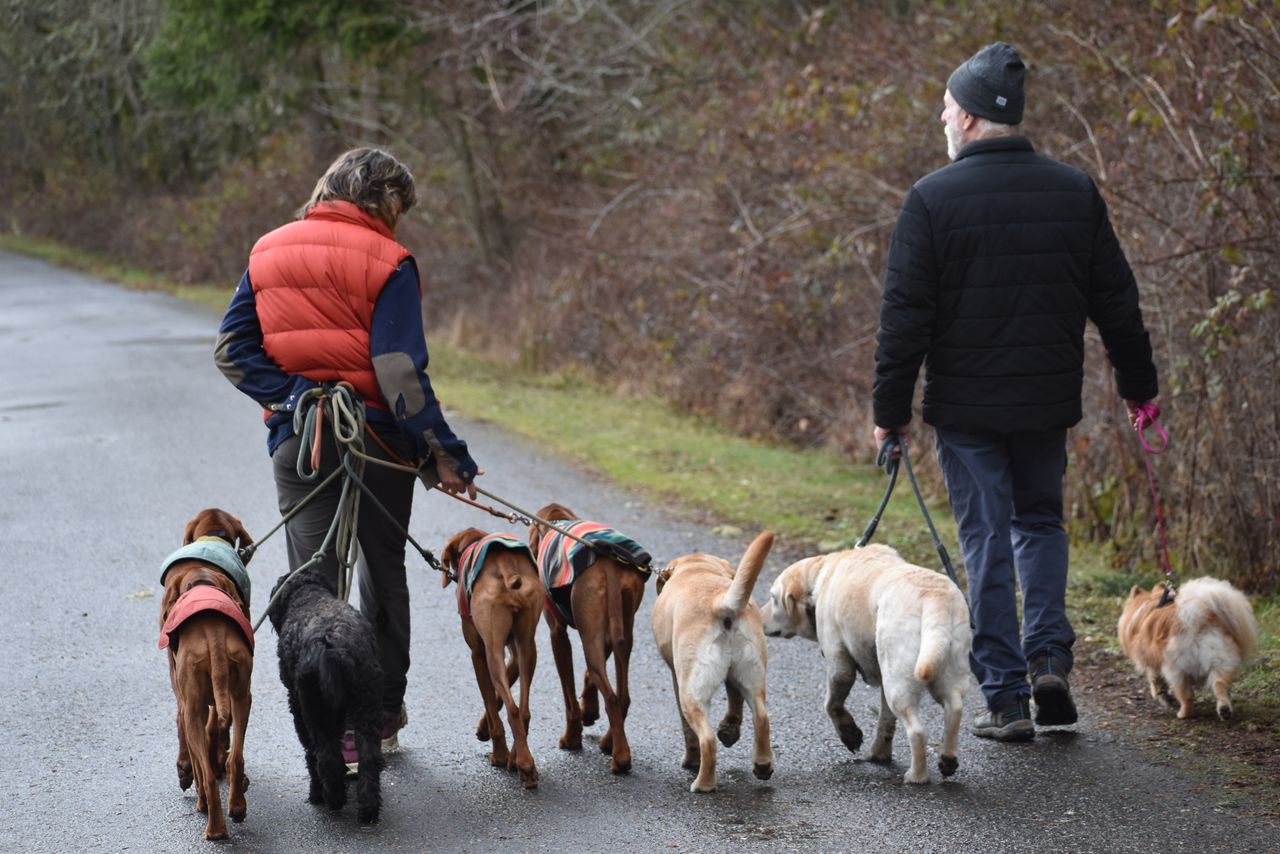
A dog walking app solves a very old problem with a very modern flow: your dog needs out at 2pm, you’re stuck at work, and somewhere within a mile of your house is a person who’d happily walk them for $20.
The apps below connect the two of you — with GPS tracking, background checks, and payment handled — and they’ve turned dog walking into a multi-billion-dollar corner of the pet care economy.
But “best dog walking app” means different things to different people. Pet owners want trust and consistency. Walkers want jobs that don’t lose 40% to fees. And a third group — the one most lists ignore — looks at those fees and thinks, someone’s making serious money running these platforms. This guide covers all three, honestly.
1. Rover — best overall
The biggest network in pet care: hundreds of thousands of walkers and sitters across the US, Canada, and parts of Europe, covering walks, boarding, house sitting, drop-ins, and daycare. Owners browse profiles with reviews and background-check badges, book through the app, and get GPS-tracked “report cards” for every walk.
Fees: roughly 20% from the walker plus a booking fee around 11% from the owner — about a third of every transaction stays with the platform. Best for: owners who want maximum choice and recurring walks with the same person; walkers who want to set their own rates. Watch out for: scale cuts both ways — vetting beyond the background check is largely on you, so treat the meet-and-greet seriously.
2. Wag! — best for last-minute walks
Wag! is the on-demand option: request a walk and a nearby walker can be at your door within the hour, Uber-style. GPS tracking, pee/poop notifications, and photo updates are all built in. It’s the app for “I got stuck at the office and the dog’s been in since morning.”
Fees: the steepest in the category — the total stack has run around 40%, which is exactly why experienced walkers drift toward other platforms. Best for: urgent, same-day coverage. Watch out for: consistency — on-demand dispatch means a different walker each time, and the company went through bankruptcy restructuring in 2025, so the same-hour coverage that made its name is thinner in some cities than it used to be.
3. Care.com — best if pet care is part of bigger household help
Care.com isn’t a dedicated dog walking app — it’s a household-hiring platform (childcare, senior care, cleaning) with pet care as one category. You pay a subscription to contact caregivers rather than a per-walk fee, then arrange terms directly.
Best for: families already hiring through the platform who want to add a walker to the mix. Watch out for: the subscription paywall, and less pet-specific tooling — no walk tracking or report cards.
4. PetBacker — best international option
Rover and Wag are heavily US-centric. PetBacker runs the same marketplace model — walkers, sitters, boarding, with reviews and in-app payment — across dozens of countries, which makes it the default pick for much of Asia, Europe, and Latin America.
Best for: pet owners and walkers outside North America. Watch out for: coverage depth varies enormously by city; check your area before committing.
5. Nextdoor and local referrals — cheapest, most work
The zero-fee option: ask your neighborhood. Nextdoor threads, community boards, and word of mouth surface local walkers who charge less because no platform takes a cut. The tradeoff is that you are the background check, the insurance, and the payment system.
Best for: budget-conscious owners comfortable doing their own vetting. Watch out for: no GPS tracking, no coverage if something goes wrong, and no recourse beyond small claims and awkward eye contact.
6. WoofTrax — best for walking your own dog
A different animal entirely: WoofTrax tracks the walks you take with your own dog and converts them into sponsor-funded donations for animal shelters. No hiring, no marketplace — just a reason to take the long route home.
Best for: owners who want their daily walk to do some good.
7. Dog walking business apps — best for professional walkers
Once a walker has steady clients, the marketplaces stop making sense — why give up 20–40% forever? Software like Time To Pet and PetPocketbook exists for exactly this stage: scheduling, invoicing, GPS walk reports, and client apps for an independent dog walking business. The platforms find you clients; these tools help you keep them.
Best for: walkers going independent with their own client list.
How dog walking apps make money (the part other lists skip)
Look at the numbers above from the platform’s side. Rover keeps roughly 31 cents of every dollar that moves through it — a fee from the walker and a fee from the owner on the same transaction. Wag! has taken as much as 40%. Multiply by millions of walks a year and you understand why the pet care marketplace model attracts so many entrepreneurs.
And here’s the strategic reality: this market is nowhere near covered. Rover dominates the US; PetBacker is broad but shallow internationally; most countries and cities have no strong local player at all. The same gap we see clients target in home services exists in pet care — arguably wider, because pet spending keeps growing through every economic cycle.
Building your own dog walking app
A Rover-style platform is a service marketplace: profiles, bookings, payments held until the service is done, GPS tracking, reviews. That’s the same architecture as the TaskRabbit-style platforms we build, pointed at a different niche — and it’s a build we know well.
- What it costs with SiteMile: complete packages run $3,500–$20,000 — from a working web platform on our proven marketplace stack (our Pricerr theme covers profiles, bookings, payments, messaging, and reviews out of the box) up to native iOS and Android apps with GPS walk tracking, published to both stores with full source code handed over.
- Where a new app wins: one city or country with no strong player, walker-friendlier fees than the 31–40% incumbents charge, or a trust angle the big apps skip — verified skill and insurance, not just an identity check.
- The playbook: the marketplace launch guide applies directly — recruit your first fifty walkers by hand, seed one neighborhood, and let density spread.
Have a pet care platform in mind? Schedule a discovery call and we’ll scope the features and give you a fixed quote.
Frequently asked questions
What is the best dog walking app?
Rover, for most people in most US cities — the network is biggest, so choice and review depth are best. Wag! wins for last-minute walks, PetBacker for international coverage, and local referrals for the lowest price if you’ll do your own vetting.
Which dog walking app pays walkers the most?
Whichever takes the least: independent clients (100%), local referrals, then Rover (walkers keep roughly 80% of their listed rate) ahead of Wag! (historically closer to 60%). Serious walkers typically start on the marketplaces and migrate their best clients to direct booking.
How much does a dog walker cost?
Typically $15–$30 for a standard 30-minute walk in US cities, varying by market, with platform fees added on top on most apps.
How much does it cost to build an app like Rover or Wag?
With SiteMile, complete packages run $3,500–$20,000 depending on scope — web platform at the low end, native iOS/Android apps with GPS tracking at the top.
A from-scratch agency build of the same platform runs $50,000+.
Request a quote for an exact figure.
The bottom line
For owners: start with Rover, use Wag! for emergencies, and always do the meet-and-greet.
For walkers: use the big apps to build a review base, then go independent. And for the third group — the ones who noticed that every walk on these platforms leaves a third of the money with the house — the pet care marketplace is one of the most attractive niches we build for, and most of the world is still up for grabs. Talk to our team if that’s the version of this article you came for.