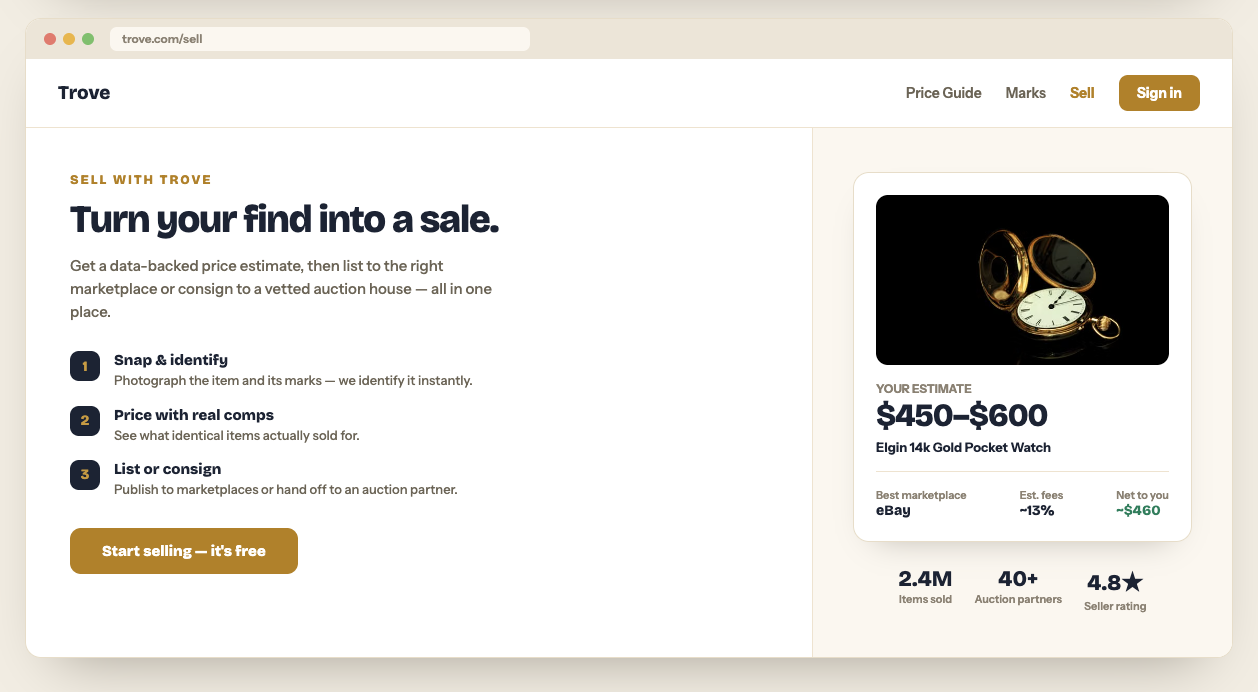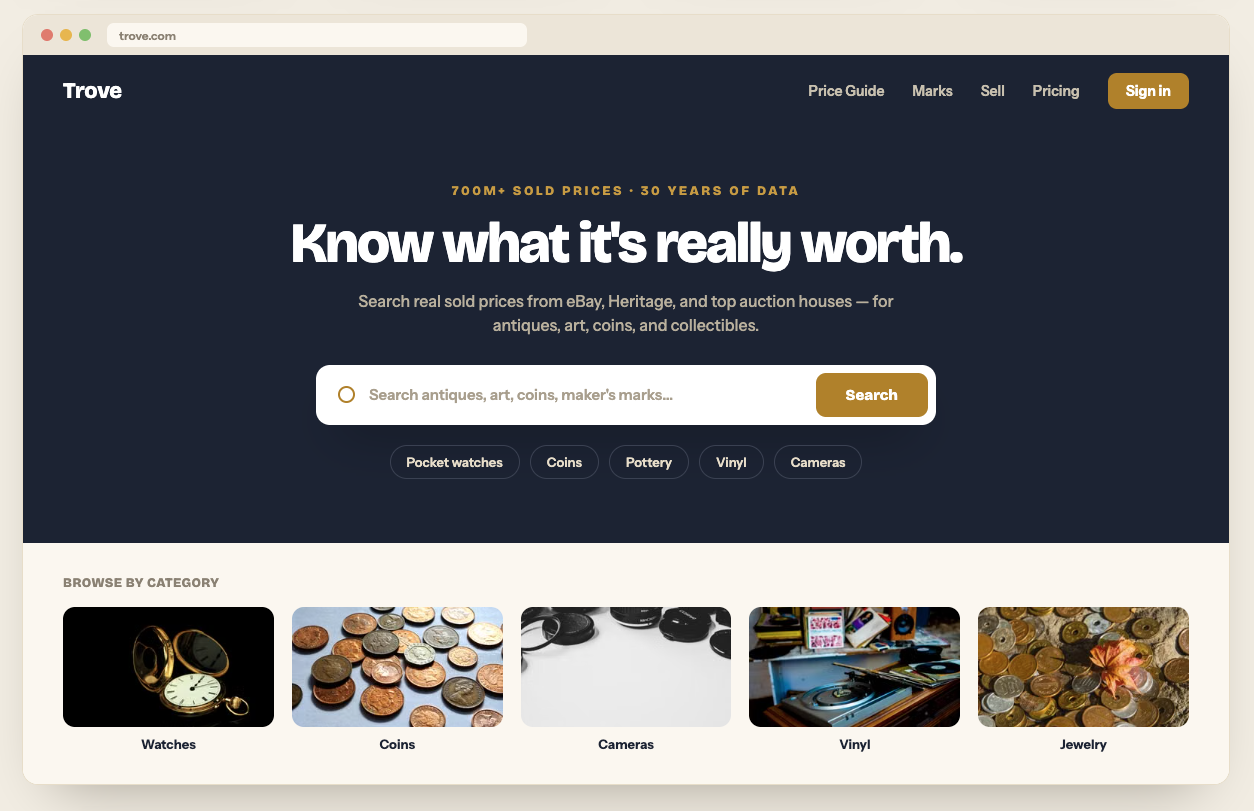
TLDR: How much does the clone cost ?
The cost is around $3.5k for the MVP to $50k depending on the features and amount of work needed by our development team.
Now about how worthpoint marketplace website works
Every attic find, estate sale, and inherited box of “old stuff” ends with the same question: what’s this actually worth?
WorthPoint built an entire business on answering it — a searchable database of hundreds of millions of sold prices for antiques and collectibles, gated behind a monthly subscription.
Notice what WorthPoint doesn’t do. It doesn’t sell antiques, doesn’t run auctions, doesn’t hold a single item. It sells answers, on a recurring subscription, to an audience of resellers, collectors, appraisers, and estate liquidators who need those answers professionally.
That makes it one of the most interesting clone targets we get asked about, because unlike a marketplace, a price-guide platform has no chicken-and-egg problem.
You need data and members, not buyers and sellers in the same city at the same time.
We’ve already mapped the buyer’s side of this market in our guide to WorthPoint alternatives — and if you’ve read it, you know the competition is thin and fragmented. Most alternatives cover one niche or do valuation badly. That’s the opening this article is about.
How the WorthPoint model works
The engine is simple:
- Aggregate sold prices. Completed sales from marketplaces and auction houses get collected, categorized, and made searchable. Sold prices — not asking prices — are the product, because they’re what an item is actually worth.
- Gate it behind a subscription. Casual visitors get a taste; serious users pay monthly for unlimited lookups. WorthPoint’s plans run in the $30/month range, which tells you what professional resellers will pay for data that directly makes them money.
- Add reference layers. Maker’s marks, patterns, signatures — identification libraries that help users figure out what they have before pricing it.
- Keep them subscribed. Saved collections, inventory tools, and valuation reports turn a lookup tool into a workspace users won’t cancel.
Revenue streams for your clone, roughly in order of ease:
- Subscriptions — the core; tiered plans (hobbyist / reseller / pro) with lookup limits
- Pay-per-report — one-off valuation reports for the attic-find crowd who won’t subscribe
- Affiliate revenue — links out to live marketplace listings for the items users research
- B2B/API access — estate liquidators, insurers, and apps paying for your data
The honest part: where does the data come from?
This is the question that separates a real WorthPoint clone from a pretty website, so let’s deal with it directly. You have four legitimate paths, and most successful platforms combine them:
- Marketplace APIs and licensed feeds. Pulling sold-listing data through official APIs and data partnerships, within their terms of service. This is how you get volume.
- Auction house partnerships. Regional and niche auction houses will often share results in exchange for exposure — their past sales become your database, your users become their bidders.
- User-contributed data. Your members log their own purchases and sales; over time the community builds the database for you. Slow to start, but defensible — nobody can take it away.
- A niche focus that shrinks the problem. Covering everything like WorthPoint takes hundreds of millions of records. Covering vintage watches, sports cards, mid-century furniture, or militaria takes thousands — an amount one dedicated founder can realistically assemble.
We can build the ingestion, deduplication, and categorization pipeline for whichever mix fits your plan — that’s standard custom software development work — but the data strategy is a business decision you should make before writing a line of code.
The features a WorthPoint clone needs
For members:
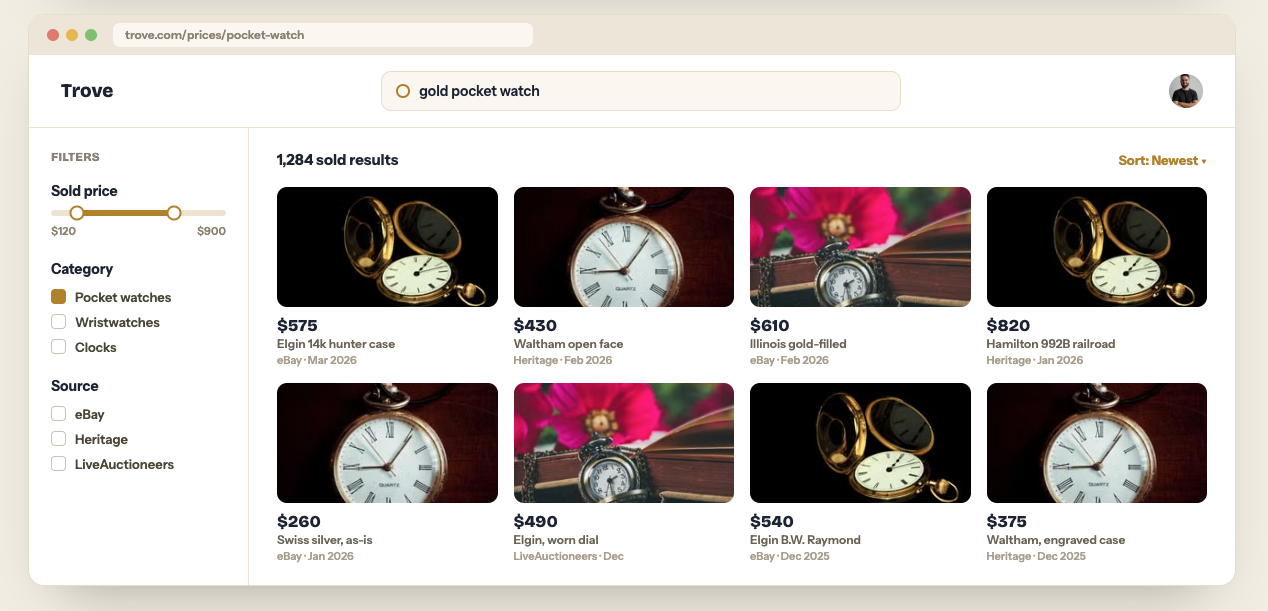
- Fast keyword search across sold items, with photos, sale dates, prices, and venues
- Filters by category, price range, date, and condition
- Price-history charts showing how an item’s value trends over time
- Identification aids: maker’s marks, stamps, and signature libraries
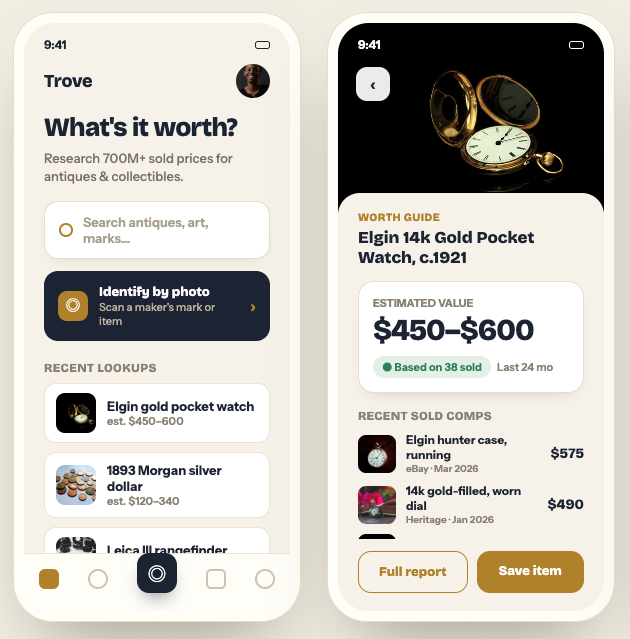
- Saved searches, collections, and a personal inventory with running total value
- Printable/exportable valuation reports (the feature appraisers and estate sellers pay for)
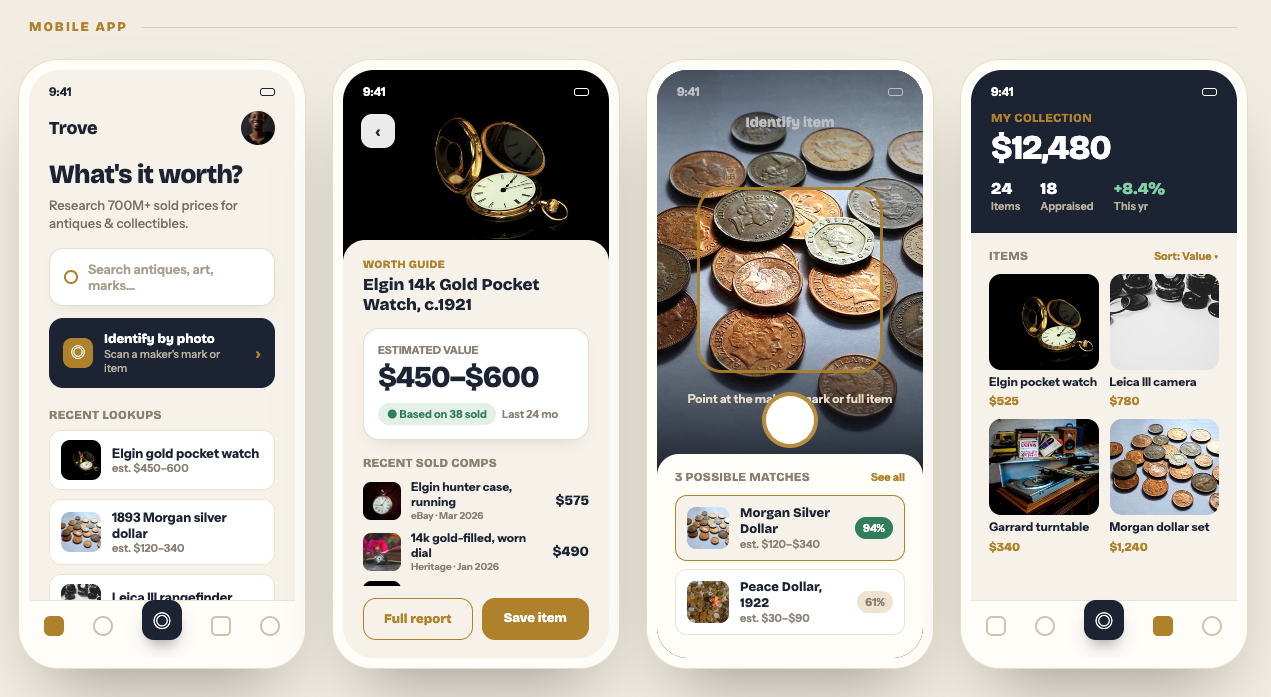
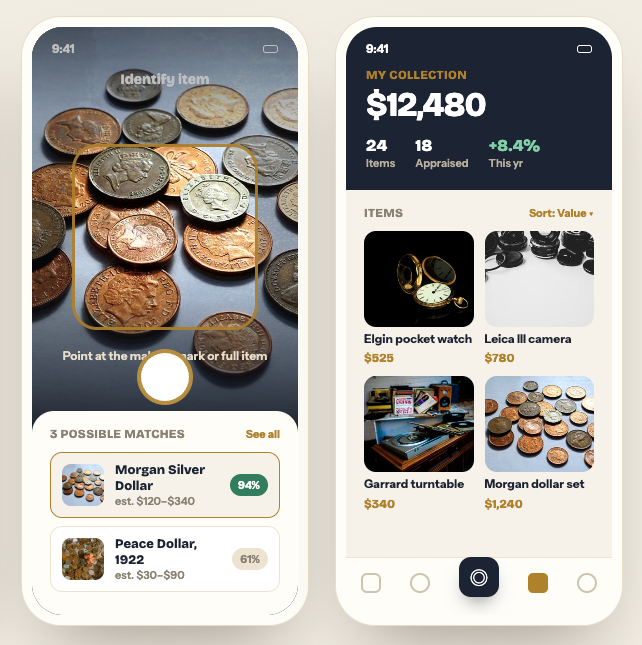
Worth adding in 2026 — AI identification. Snap a photo, and the platform suggests what the item is and pulls comparable sold results. This barely existed when WorthPoint grew up, it’s now buildable at reasonable cost, and it’s the single best differentiator a new entrant can ship.
For you (the admin):
- Membership plans, billing, and lookup limits
- Data pipeline management: imports, moderation, category mapping
- Content tools for the SEO layer (more on that below)
- Analytics: searches, conversions, churn, most-researched categories
Building it with WordPress
A price-guide platform is a membership site wrapped around a big searchable database — and WordPress handles the membership, payment, and content layers exceptionally well, which is why we build these on a WordPress core with custom database and search components underneath.
Building it with wordpress can be as low as $3,500 USD for the MVP and our team can do it. Get in touch.
Because this is more custom-software than theme-configuration, pricing follows our custom range: from $3,500 for a focused niche platform, up to $50,000 for a large-scale system with data pipelines, AI identification, and native mobile apps. A typical single-niche launch — membership, search, price charts, reports — lands well inside the lower half of that range. You get full source code either way.
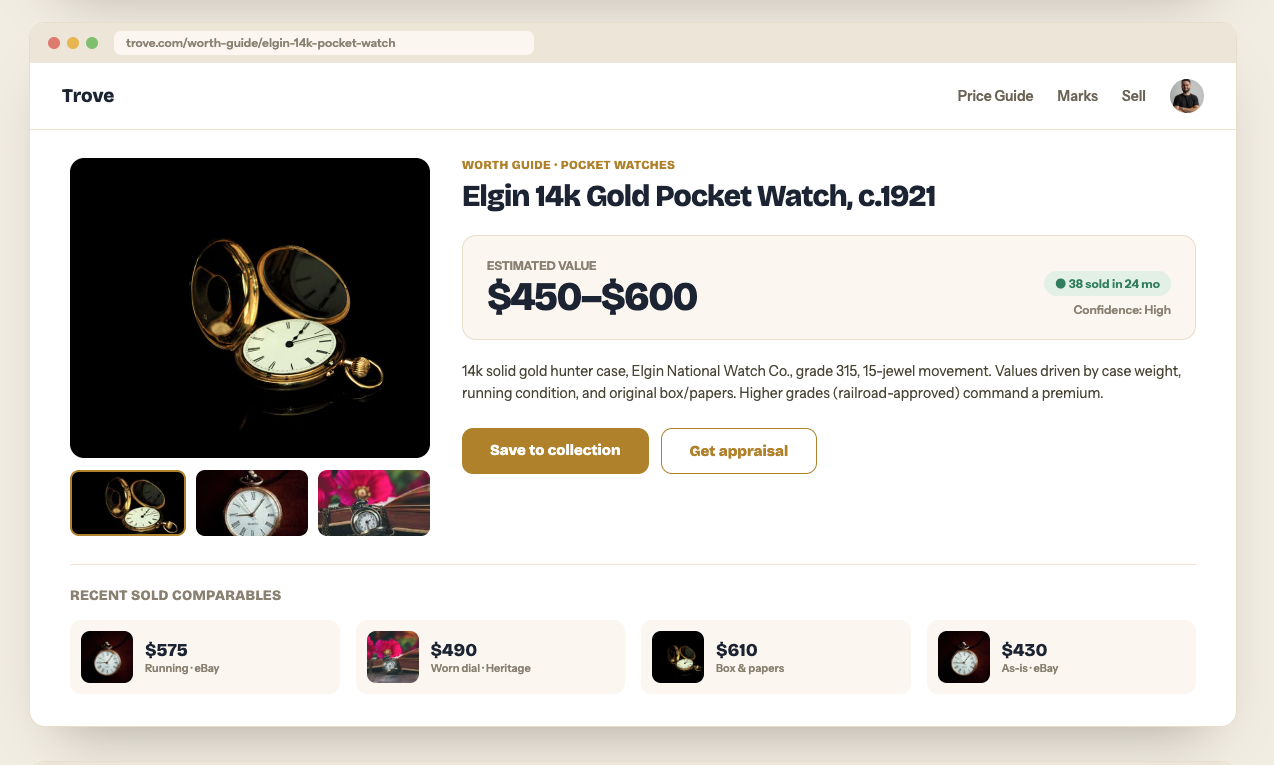
One structural advantage worth designing in from day one: every item page is an SEO asset. WorthPoint ranks for millions of “[item name] value” searches, shows a teaser, and converts the visitor to a subscriber. Your clone should do the same — public teaser pages, gated details — so the database itself becomes your marketing engine.
It’s the same content-flywheel logic we describe in our marketplace building guide, applied to data instead of listings.
Have a collectibles niche in mind? Schedule a discovery call and we’ll scope the data strategy and platform together.
Frequently asked questions
How much does it cost to build a site like WorthPoint?
With SiteMile, from around $3,500 for a niche price-guide platform on WordPress, scaling to $50,000 for large databases, AI photo identification, and native apps. Request a free quote with your niche and data plan for an exact figure.
How does a WorthPoint clone make money?
Primarily subscriptions, with pay-per-report, affiliate links to live listings, and B2B data access as add-ons. Recurring revenue from launch — no escrow, no payouts, no marketplace liquidity problem.
Do I need millions of records to start?
No — you need complete coverage of one niche, not partial coverage of everything. A watch-pricing platform with fifty thousand well-categorized sold results beats a general database with gaps. Start narrow, expand with revenue.
Can I combine it with a marketplace?
Yes, and it’s a natural second act: once collectors trust your prices, letting them buy and sell through you is a short step. We build online marketplaces too, and the platform can be architected so the marketplace bolts on later without a rebuild.
Turn “what’s it worth?” into recurring revenue
The resale and collectibles economy keeps growing, WorthPoint remains expensive and generalist, and every niche it covers shallowly is an opening for a focused, better-designed alternative. Pick the niche, and we’ll build the platform — database, membership, reports, apps, and source code included.
Get in touch with our team today and let’s scope your WorthPoint clone.