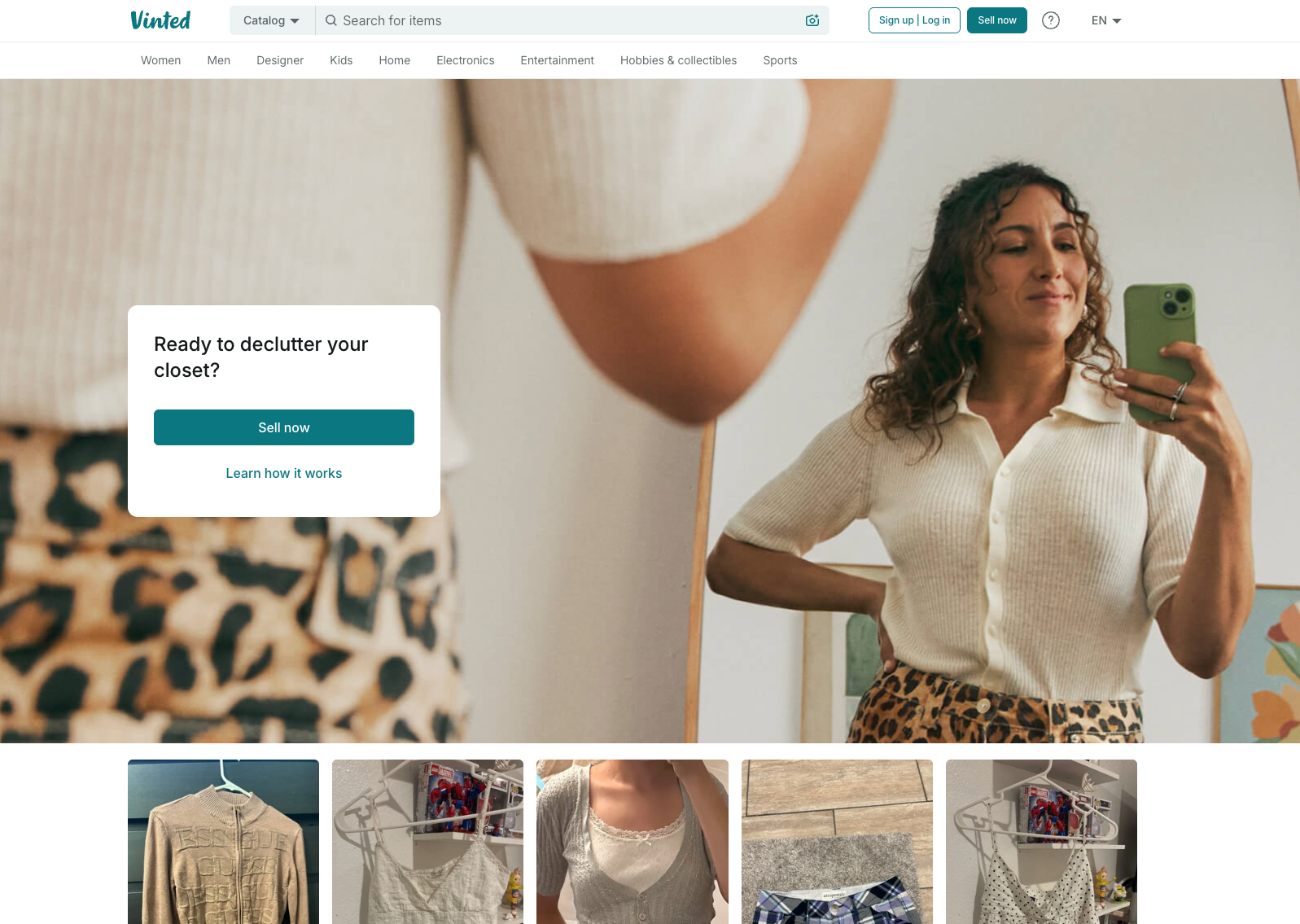
Vinted turned secondhand fashion into one of Europe’s biggest marketplace success stories — and its model is remarkably clonable.
Peer-to-peer listings, buyer protection, integrated shipping, no seller fees: the mechanics are proven, and they work just as well in niches and regions Vinted hasn’t conquered yet.
The catch has always been build cost. Custom marketplace development runs $30,000–$80,000, and the cheap “Vinted clone scripts” floating around are unsupported codebases that fall over the first time real users touch them.
There’s a third route: WordPress plus a mature marketplace theme plus targeted custom development — the same approach we use for Thumbtack-style service marketplaces, adapted for peer-to-peer item selling.
Realistic budget: $1,500–$3,000 for the full marketplace website, or $5,250 for the website plus fully featured native iOS and Android apps. Here’s how the build works.
What Makes Vinted’s Model Work
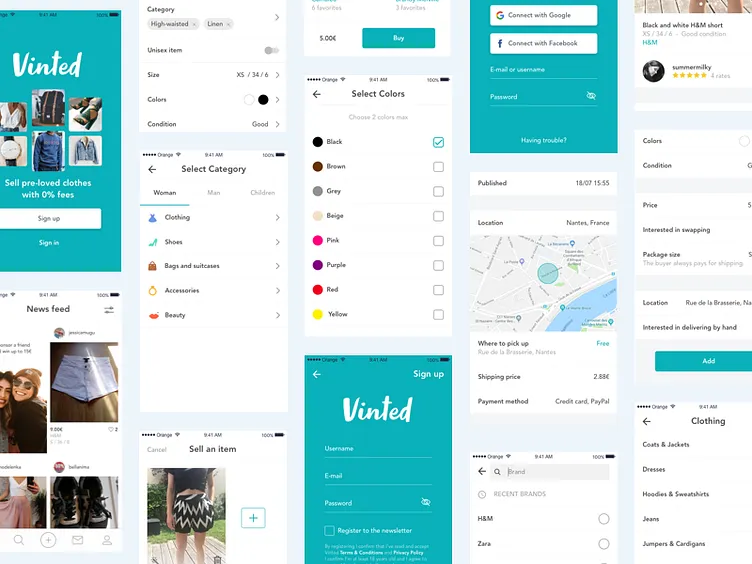
Before cloning anything, it’s worth understanding what you’re cloning. Vinted’s growth engine is a specific combination of choices:
Zero seller fees. Sellers list and sell for free, which floods the platform with inventory. Revenue comes from the buyer side instead — a buyer protection fee added at checkout — plus optional paid features for sellers.
Buyer protection as the product. The fee buys the buyer an escrow-style guarantee: money is held until the item arrives as described. This solves the core trust problem of buying used goods from strangers, and it’s the reason people accept the fee.
Integrated shipping. Prepaid shipping labels generated in-app remove the biggest friction in peer-to-peer selling — nobody has to figure out postage. The platform’s shipping deals often beat retail rates, which becomes another selling point.
Social mechanics. Favorites, follows, member profiles, and chat make browsing feel like social media, which drives the return visits a marketplace needs to reach liquidity.
A successful clone keeps these mechanics and changes the market: a different country, a specific vertical (vintage only, kids’ clothing, streetwear, sports gear, books, board games), or a local-first angle. Focused marketplaces reach critical inventory mass far faster than another generalist trying to out-Vinted Vinted.
The Features Your Vinted Clone Needs
From our marketplace builds, ranked by importance:
Listings with photo-first design. Sellers photograph an item, set price, brand, size, and condition, and publish in under a minute. Listing friction is the number-one determinant of inventory volume.
Search and filtering. Category, brand, size, condition, price, location. In fashion resale, brand and size filtering isn’t a nice-to-have — it’s how every buyer shops.
Checkout with buyer protection. Stripe/PayPal payment, funds held until the buyer confirms receipt, automatic release after a dispute window. This is your revenue engine and your trust engine in one feature.
Shipping integration. Prepaid label generation with your local carriers, tracking synced to the order status.
In-platform messaging. Buyers ask questions, negotiate, and complete bundles without leaving the platform.
Member profiles with reviews. Ratings after each transaction, follower counts, and closet pages — the reputation layer that lets strangers trade safely.
Seller wallet and payouts. Sales accumulate in an on-platform balance, withdrawable to a bank account — which also opens the door to instant re-spending on the platform.
Admin dashboard. Moderation queues, dispute resolution, category management, fee configuration, and revenue reporting.
Optional revenue boosters: promoted listings, “bump” purchases to refresh visibility, wardrobe spotlight subscriptions — the seller-side upsells Vinted itself uses.
How We Build It: Pricerr Theme + Custom Development
Our build stacks two layers, which is exactly what keeps the price an order of magnitude below bespoke development.
Layer 1: The Pricerr Theme
The foundation is our Pricerr theme — our marketplace theme for selling both services and items through a platform that connects independent sellers with buyers. Out of the box it delivers the marketplace core: seller profiles, listings, ordering and checkout, buyer–seller messaging, reviews, and payment integration.
We’ve developed and maintained it for years across hundreds of production sites, so the foundation of your platform is battle-tested code, not a blank repository.
Layer 2: Custom WordPress Development
On top of Pricerr, our custom WordPress development shapes the platform into the Vinted model: photo-first item listings with brand/size/condition attributes, the buyer-protection fee and escrow flow, shipping label integration for your carriers, the wallet and payout system, favorites and follows, and your design and branding throughout.
Because we wrote the theme, there’s no reverse-engineering phase — the developers customizing the code are its authors, which is why the budget stays in the thousands instead of the tens of thousands.
Layer 3 (Optional): Native iOS and Android Apps
Vinted is a mobile-first product — most listings are photographed and published from a phone — so for many projects the apps aren’t optional polish, they’re the main storefront. We build fully featured native iOS and Android apps running on the same WordPress backend: full listing creation with camera integration, push notifications for messages, offers, and sales, and everything the website does.
One backend, one admin panel, apps and site always in sync — and the stack is built secure and architected to scale to millions of users, so the platform you launch as an MVP is the same one that carries you through growth.
What Does a Vinted Clone Cost?
| Package | Price | What’s included |
|---|---|---|
| Marketplace website | $1,500 – $3,000 | Pricerr theme, custom development for the Vinted-style flow (listings, buyer protection, shipping, wallet), your branding and design, payments, seller and buyer dashboards, admin panel, launch support |
| Website + native iOS & Android apps | $5,250 | Everything above, plus fully featured native apps for iOS and Android with camera listing flow and push notifications, published to the App Store and Google Play |
Where you land in the website range depends on feature depth — a lean MVP with listings, checkout, and buyer protection sits at the bottom; shipping automation, wallets, promoted listings, and complex filtering push toward the top. Every project includes 12 months of technical support, and we stay on as your development partner as the marketplace grows.
For comparison: bespoke agencies quote $30,000–$80,000 for this platform, and cheap clone scripts come with no support, no updates, and security you don’t want your users’ payment data anywhere near. The WordPress route gives you real code ownership at startup-viable pricing.
Request a free quote with your niche and must-have features, and we’ll price your exact spec.
Timeline
A typical Vinted-style build launches in 3–6 weeks for the website, depending on custom feature depth, plus 2–3 weeks when native apps are included (App Store review included). You’ll be recruiting sellers and building inventory while a from-scratch build would still be choosing a tech stack.
Why WordPress for a Resale Marketplace?
You own everything. No SaaS marketplace fees skimming your margin, no vendor lock-in, no platform that can change its pricing under you. Your code, your data, your hosting.
SEO is the growth channel. Resale marketplaces win on long-tail search — “used [brand] [item] size M” — and WordPress is the strongest SEO platform there is.
Every listing, brand page, and category is an indexable landing page; when you’re ready to push growth, our SEO packages handle exactly this kind of marketplace site.
The ecosystem is already there. Email automation, multilingual support for cross-border expansion, blogs for content marketing — mature WordPress solutions exist for all of it, where a proprietary script would need custom work for each.
Know the Market You’re Entering
If you haven’t already mapped the competitive landscape, start with our breakdown of sites like Vinted — it covers how Depop, Poshmark, Sellpy, and the other players differentiate, which is exactly the analysis you need to pick a defensible niche for your own platform. The adjacent models are buildable with the same stack too: an Etsy-style marketplace for handmade goods, an OfferUp-style local marketplace, or a general online marketplace — if your idea is a variation, the Pricerr-plus-custom-development approach flexes to fit it.
Need this app built?
No problem, we do that. Our team builds custom mobile apps from idea to launch. And we help listing your app in the AppStore and Google Play Store.
Frequently Asked Questions
How much does it cost to build a Vinted clone?
With our WordPress approach: $1,500–$3,000 for the complete marketplace website, or $5,250 including fully featured native iOS and Android apps published to both app stores. Bespoke development of the same platform typically starts at $30,000.
How does a Vinted clone make money?
The core model is a buyer protection fee (a percentage plus fixed amount added at checkout) — sellers list free, which maximizes inventory. On top of that: promoted listings, visibility bumps, and seller subscriptions. We build whichever mix fits your market.
Can WordPress really handle a marketplace with lots of users?
Yes. The platform is built secure and architected to scale — with proper hosting it supports millions of users, and because you own the stack, scaling is a hosting decision rather than a replatforming project.
WordPress runs some of the highest-traffic sites on the web.
Do the mobile apps have all the website’s features?
Yes — the $5,250 tier includes fully featured native apps: camera-based listing creation, browsing and filtering, checkout, messaging with push notifications, and seller dashboards, all synced with the website through one shared backend.
Do I need to clone Vinted exactly?
No — and you shouldn’t. The winning strategy is keeping the proven mechanics (free listings, buyer protection, integrated shipping) while narrowing to a niche or region where you can reach inventory critical mass fast.
Do you provide support after launch?
Every project includes 12 months of technical support, and most clients keep working with us long-term — adding features, scaling infrastructure, and running SEO as the marketplace grows.
Ready to launch your resale marketplace? Get a free price quote — tell us your niche and we’ll come back with an exact price and timeline.